Indian Contractors Are Losing ₹60 Lakh a Year — Here's Why
Vendor mismanagement is killing margins for construction companies in India. How? Missed GST compliance, delayed payments, and lack of visibility into vendor performance. Let's break it down in detail.
The Real Cost of Poor Vendor Management
Many contractors underestimate how much poor vendor management costs their business. Beyond the obvious financial losses, the implications affect project timelines, client relationships, and long-term growth potential. Let’s dive deeper into the most common pitfalls:
1. GST Errors
India's Goods and Services Tax (GST) regime is strict. If your vendors' GSTINs (Goods and Services Tax Identification Numbers) are invalid, you risk penalties and losing Input Tax Credits (ITC). ITC is crucial because it offsets the GST you pay on inputs against the tax you collect on sales. Without it, your profitability takes a hit.
Example: In one documented instance, a mid-sized contractor in Pune faced an audit where over 15% of their vendors were flagged for non-compliance. The result? ₹12 lakh in penalties and disallowed ITC claims. This was entirely avoidable with proper vendor verification protocols.
2. Delayed Payments
Late payments don’t just sour vendor relationships; they also cost you money. Many vendors offer early payment discounts of 1–2%, which might seem small but add up quickly for large projects.
Case Study: A Delhi-based contractor managing a ₹20 crore project lost ₹3 lakh in early payment discounts in one year because their approval process relied on manual spreadsheet tracking. The delays caused by back-and-forth emails and unstructured workflows completely removed any possibility of availing discounts.
3. Lack of Visibility into Vendor Performance
How do you know if your vendors are meeting expectations? Without performance tracking, you’re flying blind. Poor-quality materials, delivery delays, and inconsistent pricing can quietly erode your margins.
Actionable Steps:
- Run Monthly GST Audits: Use automated tools to validate vendor GSTINs before making payments.
- Establish Payment Workflows: Implement approval hierarchies and deadlines to ensure timely payments.
- Track Vendor KPIs: Measure delivery timelines, quality issues, and pricing fluctuations in a centralized system.
How ERP Changes the Game
Enterprise Resource Planning (ERP) systems are transforming how contractors manage operations. Here’s how a modern ERP like JobNext can solve the pain points outlined above:
1. Automating GST Compliance
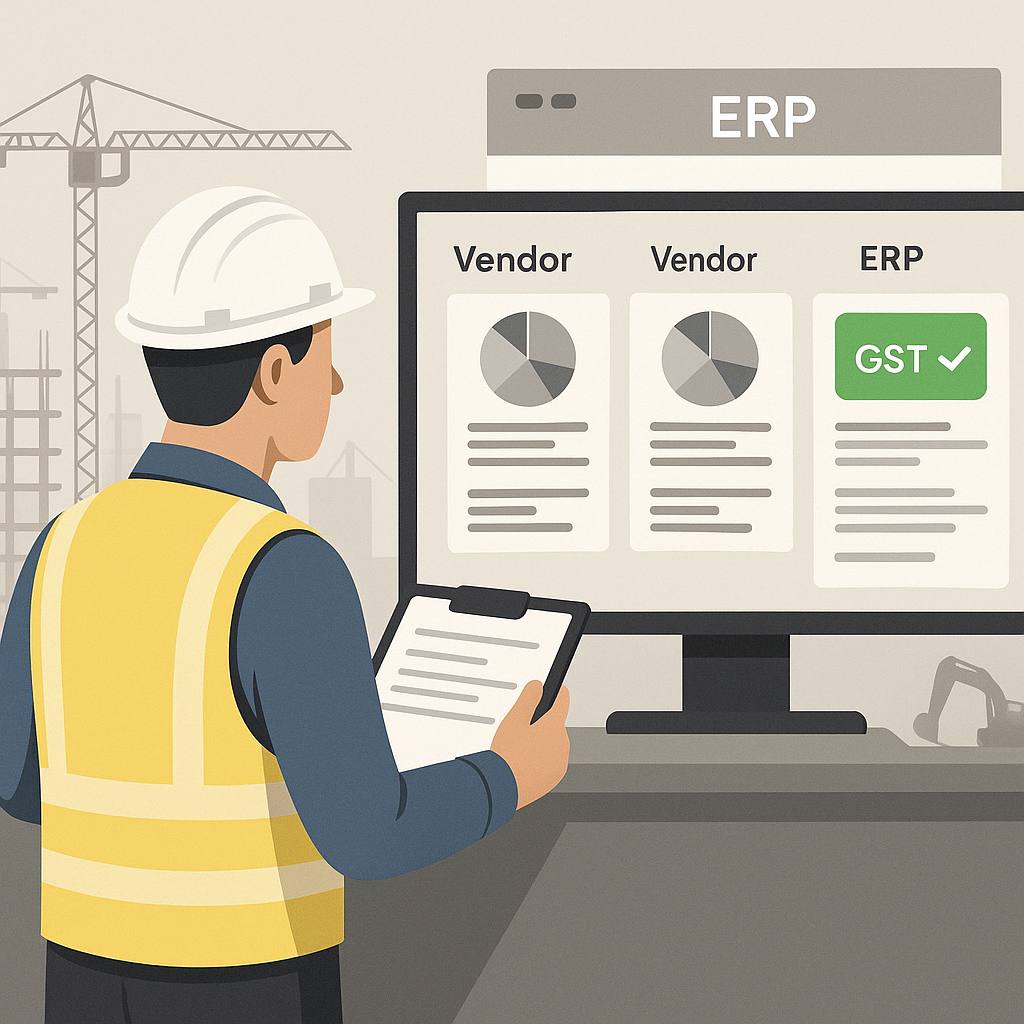
With an ERP, vendor registration requires mandatory GSTIN validation. This eliminates the risk of non-compliance from day one. Additionally, the system automatically calculates GST for every transaction and integrates with government portals for seamless filing.
Example: A contractor in Bengaluru used JobNext to manage GST compliance across 250 vendors. By automating filing and validations, they reduced errors by 95% and saved ₹8 lakh in penalties over two years.
2. Streamlined Workflows
Manual processes often create bottlenecks. An ERP enforces structured workflows for purchase orders (POs), invoices, and payments. This ensures approvals happen on time and early payment discounts are not missed.
Example: One contractor in Chennai saved ₹5 lakh in a year by using JobNext’s automated approval features. Payments that previously took 14 days to process were reduced to just 3 days.
3. Vendor Performance Tracking
ERPs provide real-time dashboards to evaluate vendor performance. Over time, you can identify which vendors consistently deliver on time and maintain quality standards — and which ones are costing you money.
Key Features of JobNext for Vendor Management:
- Centralized Vendor Directory: All vendor details, including GSTIN, PAN, and contact information, are stored in one place.
- Performance Dashboards: Compare vendors on metrics like delivery timelines, material quality, and pricing consistency.
- Automated Alerts: Get notified of delays or non-compliance issues in real-time.
Why Indian Contractors Can't Ignore GST Compliance
India’s GST system is unforgiving for non-compliance. The penalties for errors can range from fines to imprisonment in severe cases. For contractors juggling multiple vendors, the risk multiplies.
1. Frequent Changes in GST Rules
The GST Council regularly updates rules, including changes to tax rates, filing deadlines, and ITC claim requirements. Keeping up manually is nearly impossible.
2. Audit Risks
Tax authorities often scrutinize contractors because of the high value of transactions in this industry. Without the proper documentation, you’re an easy target.
Pro Tip: Use an ERP integrated with a GST Suvidha Provider (GSP) like MastersIndia to stay audit-ready. JobNext, for instance, ensures all transactions are GST-compliant and generates reports tailored for audits.
The Bottom Line: Structured Vendor Management Saves Money
If you’re losing ₹60 lakh annually to vendor mismanagement, an ERP isn’t a luxury — it’s a necessity. The upfront cost of implementing a system like JobNext is far outweighed by the savings from reduced penalties, better vendor performance, and early payment discounts.
Benefits of JobNext:
| Feature | Benefit |
|---|---|
| GST Compliance Automation | Reduces errors, ensures ITC claims, and avoids penalties. |
| Real-Time Vendor Dashboards | Identifies reliable vendors and flags underperformers. |
| Early Payment Discount Tracking | Saves 1–2% on payments, translating to lakhs annually. |
| Centralized Data Management | Reduces manual work and eliminates errors from scattered spreadsheets. |
FAQ
Q: How does an ERP help with GST compliance?
A: An ERP automates GST validation and filing, minimizing human error and penalties. For example, JobNext integrates with MastersIndia GSP, ensuring seamless GST filing.
Q: Can ERP track vendor performance?
A: Yes. JobNext tracks key metrics like delivery timelines, material quality, and pricing trends. Vendors are rated over time, making it easier to identify reliable partners.
Q: Is ERP affordable for small contractors?
A: Cloud-based ERPs like JobNext operate on a subscription model, making them scalable and affordable for SMEs. Most contractors see a high ROI within the first year.
Q: How long does it take to implement an ERP?
A: Implementation timelines vary but can range from 4–12 weeks. JobNext offers onboarding support to ensure a smooth transition.
Q: Can I use an ERP to manage multiple projects simultaneously?
A: Absolutely. JobNext is designed for scalability, allowing contractors to manage multiple projects, vendors, and compliance requirements from a single dashboard.
If you’re dealing with vendor chaos and GST compliance headaches, JobNext can help. Get started free →
Learn more at JobNext.ai