The Problem: Procurement Jobs Are Changing Faster Than Most Teams Can Keep Up
10 years ago, procurement in construction was simpler. You negotiated rates, issued purchase orders (POs), and hoped the quantities would work out. But today? It’s a different ballgame. Material prices are volatile, projects are more complex, and clients expect razor-thin margins. If you’re still managing procurement with spreadsheets and guesswork, you’re already behind.
The biggest shift? Procurement managers are no longer just buyers. They’re cost controllers, risk managers, and data interpreters. If you’re not tracking your real-time project costs, you’re flying blind.
Trend #1: Real-Time Cost Tracking Is No Longer Optional
Margins in construction are already tight—around 5-8% for most contractors, according to Construction Dive. But poor cost tracking can erode even that. Let’s say your Bill of Quantities (BOQ) estimates 1,000 cubic meters of concrete. You purchase based on that. But what if your site team ends up pouring 1,050 cubic meters? Without real-time tracking, you’ll only find out when your supplier bills you for the extra 50 cubic meters. By then, it’s too late, and your margin takes a hit.
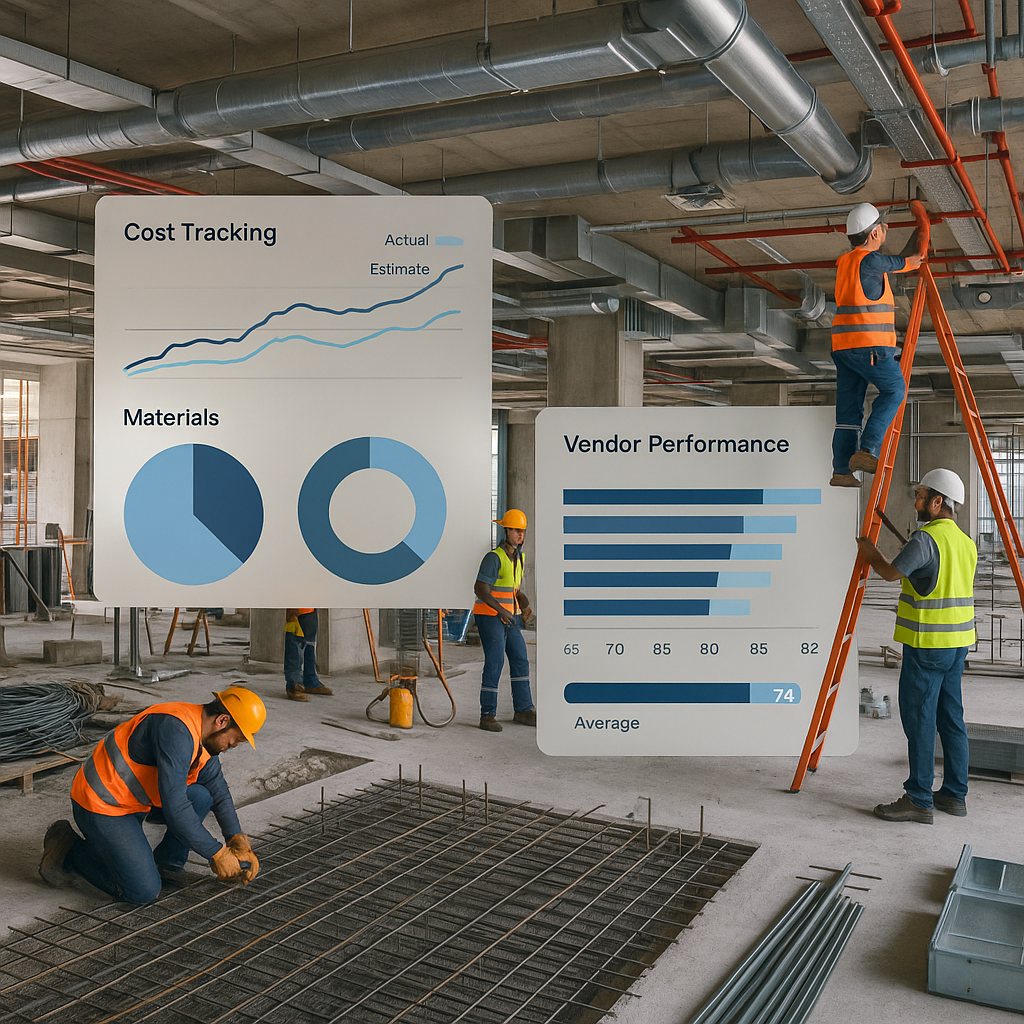
This is why tools that track budgeted vs actual costs in real time are critical. For example, platforms like ProjectsNext offer a straightforward workflow for linking BOQ quantities to actual consumption. You can monitor every cubic meter poured, compare it against the estimate, and flag overruns immediately. This allows you to correct course before the budget spirals out of control.
Actionable Steps for Real-Time Cost Tracking:
- Adopt a Cost-Tracking Tool: Choose software that integrates with your BOQ and procurement workflow. Ensure it provides real-time dashboards.
- Set Up Alerts: Configure the system to alert you when consumption exceeds 90% of the estimated BOQ for any material.
- Involve Your Site Team: Train your site engineers to update material consumption regularly in the system.
- Audit Monthly: Review the budget vs actual reports at least once a month to catch discrepancies early.
For a detailed breakdown of how this works, check out this guide to real-time BOQ tracking.
Trend #2: Procurement Is Becoming Data-Driven
Gone are the days when experience alone was enough. Today, procurement teams need data to back every decision. Want to negotiate better vendor rates? You need a historical cost database. Want to explain why you’re switching suppliers mid-project? You need performance metrics.
Many contractors struggle here. Their data is scattered—some in spreadsheets, some in emails, and some in someone’s head. This creates chaos and inefficiency. Structured procurement tools solve this by centralizing vendor performance data, rate histories, and material consumption trends. This makes it easier to make decisions grounded in facts, not gut feelings.
Actionable Steps for Data-Driven Procurement:
- Centralize Your Data: Use a single system for storing vendor quotes, rate histories, and performance metrics.
- Track Vendor Performance: Evaluate suppliers quarterly based on delivery timelines, quality, and pricing consistency.
- Use Historical Data: Before issuing an RFQ (Request for Quotation), check past rates to set realistic benchmarks for negotiations.
- Standardize Processes: Create templates for RFQs, evaluation criteria, and PO approvals to ensure consistency.
By implementing these steps, you’ll transition from reactive decision-making to a proactive, data-backed approach.
Trend #3: Multi-Trade Projects Need Unified Systems
If you’re managing a single trade—say, MEP (Mechanical, Electrical, and Plumbing)—it’s challenging enough to handle procurement. But if you’re overseeing multi-trade projects (civil, electrical, HVAC, finishes), the complexity compounds. Each trade has its own purchase orders, RFQs, and vendors. If your systems aren’t unified, you’re likely to miss something critical.
A unified platform like ProjectsNext can help. It replaces separate tools for each trade with a single workflow. Material requisitions flow into RFQs, vendor offers are compared side-by-side, and approved POs are issued—all in one system. This improves efficiency and reduces the risk of errors.
Benefits of Unified Systems:
| Feature | Without Unified Systems | With Unified Systems |
|---|---|---|
| Data Accessibility | Scattered across tools | Centralized and accessible |
| Error Rate | High due to manual processes | Reduced with automation |
| Collaboration | Fragmented across teams | Streamlined in one platform |
| Cost Management | Reactive | Proactive |
Actionable Steps for Implementing Unified Systems:
- Evaluate Your Current Tools: Identify gaps in your existing procurement and cost-tracking workflows.
- Choose a Scalable Platform: Select software that supports multi-trade projects and integrates with your existing systems.
- Train Your Team: Ensure all stakeholders are trained to use the platform effectively.
- Monitor Adoption: Track usage metrics to ensure the system is being utilized as intended.
For tips on comparing vendor offers effectively, see this guide on quote comparison.
Skills Procurement Managers Need in 2024 (and Beyond)
- Data Analysis: If you can’t interpret cost trends, you’ll struggle to control budgets. Learn basic Excel, Power BI, or any tool your company uses.
- Negotiation: Prices fluctuate, but good negotiators can lock in favorable rates even in volatile markets. This isn’t just about being tough—it’s about being informed.
- Tech Savvy: Whether it’s ERP software, procurement platforms, or even WhatsApp integrations, procurement managers need to adapt to new tools quickly.
- Risk Management: Procurement isn’t just about buying materials. It’s about anticipating what could go wrong (supply chain delays, price hikes) and planning for it.
Common Mistakes in Modern Procurement
- Ignoring Indirect Costs: Freight charges, taxes, and wastage can add 10-15% to your material costs. Always factor them in.
- Not Locking Rates: In a volatile market, floating rates are a gamble. Lock supplier rates whenever possible.
- Over-Reliance on L1 Quotes: The lowest bid isn’t always the best. Compare quotes based on quality, delivery timelines, and payment terms—not just price.
- Skipping Approvals: A single unapproved PO can derail your budget. Multi-level approval workflows can prevent this.
FAQ
Q: What’s the best way to track budgeted vs actual costs? A: Use a tool that links BOQ quantities directly to material consumption. ProjectsNext is one example that offers real-time tracking.
Q: How can I negotiate better rates with suppliers? A: Start with data. Use historical cost databases to show trends and justify your counteroffers. Also, lock rates for key materials early in the project.
Q: Should small contractors invest in procurement software? A: Yes, if you’re managing multiple projects or trades. Even basic tools can save you significant costs by preventing errors and overruns.
Q: How can I evaluate vendor performance effectively? A: Create a scoring system based on delivery timelines, quality of materials, and pricing consistency. Review this data quarterly.
Q: What’s the ideal way to compare vendor quotes? A: Use a weighted scoring system that considers not just price but also delivery timelines, quality certifications, and payment terms.
If you’re struggling with procurement complexity, ProjectsNext can help. Get started free →
Learn more at JobNext.ai