Why Subcontractor Cost Overruns Are So Common
Let’s be blunt. Most subcontractor management plans are glorified checklists. They list tasks, deadlines, and maybe a few compliance notes. But they rarely address the two factors that drive cost overruns:
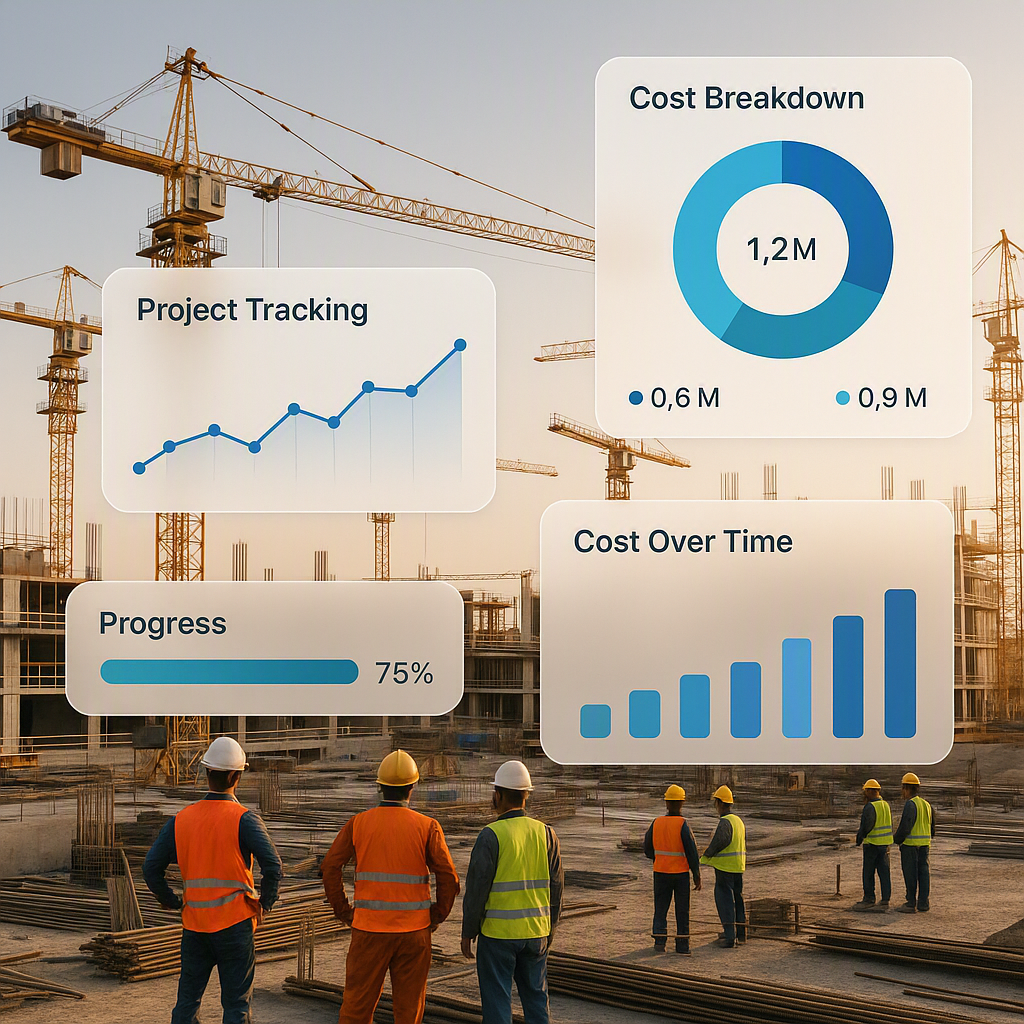
- Progress tracking: If you don’t measure progress accurately, you’re flying blind. Paying for incomplete work is a sure way to bleed margins.
- Payment control: Without structured payment approvals tied to measurable progress, overruns creep in fast.
The good news? These issues are solvable. You just need a template that does more than tick boxes. A well-thought-out subcontractor management plan can save you from financial headaches and improve project outcomes.
Step-by-Step: Building a Subcontractor Management Plan Template
An effective subcontractor management plan isn’t just a document—it’s a control mechanism. It ensures accountability, reduces ambiguity, and minimizes waste. Here’s how to build one that works:
1. Scope of Work (SoW)
The Scope of Work (SoW) is the foundation of your subcontractor relationship. It defines exactly what you’re hiring the subcontractor to do, leaving no room for misinterpretation. The more detailed your SoW, the fewer disputes you’ll face down the line.
What to include in an SoW:
- Activities: Clearly list each task the subcontractor is responsible for. Avoid vague terms like "general labor" or "site support." Instead, specify activities such as "installation of 500 sqm of drywall" or "welding of 100 linear meters of structural steel."
- Bill of Quantities (BOQ) items: Tie each activity to specific BOQ line items. This ensures there’s no mismatch between the work being performed and your project’s budget allocation.
- Acceptance criteria: Define what constitutes “completion” for each task. For example, “plastering is considered complete when 100 sqm is applied with a thickness of 12 mm and passes quality inspection.”
Why it matters: Without a clear SoW, disputes over scope are inevitable. For example, if a vendor claims they completed “extra work” but the task wasn’t scoped, you’ll scramble to reconcile costs later.
2. Progress Measurement Method
Tracking progress accurately is critical to preventing cost overruns. But how do you measure progress in a way that’s both fair and actionable?
Common methods for tracking subcontractor progress:
- Percentage completion: This is the simplest method but often the least reliable. It’s subjective and prone to disputes unless backed by clear evidence.
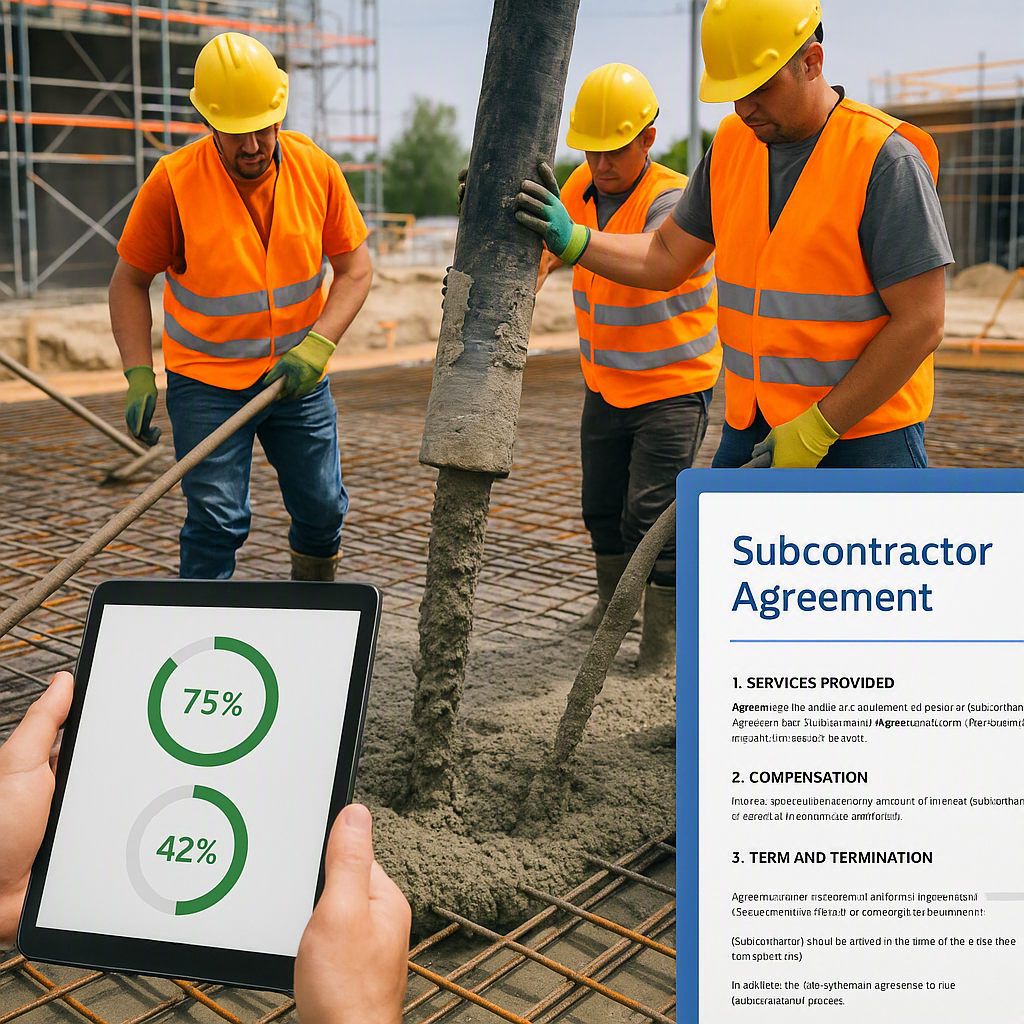
- Measurement-based tracking: This involves quantifying completed work against BOQ items. For example, tracking the cubic meters of concrete poured or square meters of plaster applied. This method is best for high-value or labor-intensive trades like civil works, MEP, or finishing.
- Milestone-based tracking: Payments and progress evaluations are tied to specific project milestones. For example, “foundation completed” or “roofing installed."
Pro tip: Measurement-based tracking is the gold standard for most construction projects. For example, if you’re hiring a subcontractor for structural work, track cubic meters of concrete poured or the weight of steel installed. ProjectsNext’s blog on WBS estimating dives deeper into this tracking framework.
Actionable Steps for Progress Measurement:
- Define key metrics for each trade (e.g., volume, area, or units completed).
- Use digital tools or mobile apps to log progress daily.
- Cross-check progress reports with on-site inspections and BOQ data.
3. Compliance Checklist
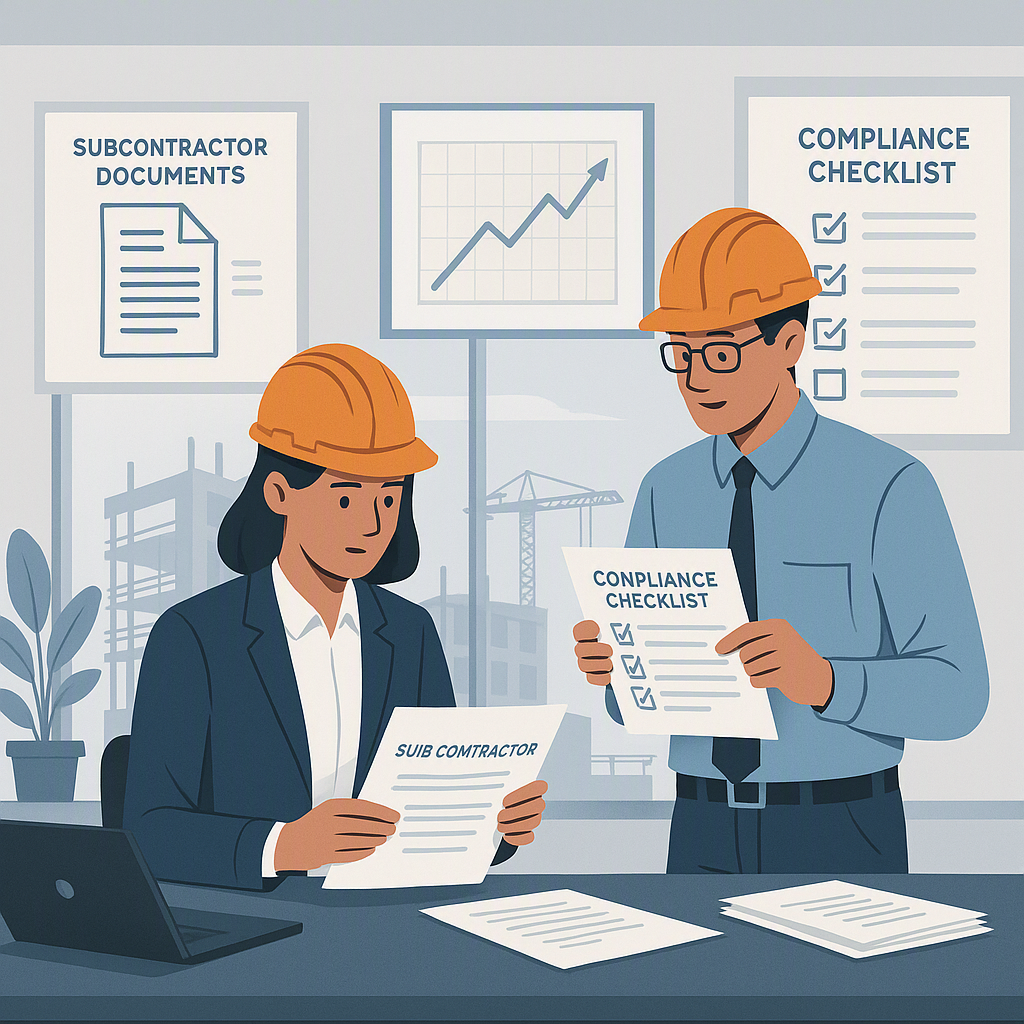
Non-compliance isn’t just risky—it’s expensive. Governments impose hefty penalties for non-compliance with tax, labor, and safety regulations. A compliance checklist ensures your subcontractors meet legal and contractual obligations.
What to include in a compliance checklist:
- GST registration (India-specific): Verify your subcontractor’s GST number to avoid cascading tax issues.
- Tax Deducted at Source (TDS) documentation: Ensure TDS is deducted and documented correctly to prevent tax liabilities.
- Bank guarantees (if applicable): For high-value trades, insist on a performance bank guarantee.
- PF/ESI compliance: For labor-heavy trades, ensure subcontractors comply with Provident Fund (PF) and Employees' State Insurance (ESI) regulations.
Why it matters: GST penalties and labor compliance violations can erode your project’s profitability. For a detailed guide, check out this guide to GST compliance for contractors.
Actionable Steps for Compliance:
- Maintain a digital repository of all compliance documents.
- Audit compliance documentation before releasing the first payment.
- Schedule periodic checks to ensure ongoing compliance.
4. Payment Approval Workflow
Unstructured payment workflows are a breeding ground for cost overruns. To prevent this, tie payments to measurable progress.
How to structure a payment workflow:
- Progress-based invoicing: Tie every invoice to completed progress. For example, if a subcontractor invoices ₹10 lakh for plastering but measurement sheets show only 800 sqm completed out of 1,000 sqm scoped, pay only 80%.
- Multi-level approvals: Set up an approval chain that includes the site manager, project manager, and finance team. This ensures all stakeholders agree on the progress before payment is released.
- Holdback payments: Retain a percentage (e.g., 10%) of each payment until the project or phase is fully completed and defect-free.
Actionable Steps for Payment Control:
- Use progress measurement data to validate invoices.
- Automate the approval workflow using construction management software.
- Clearly communicate payment terms in the contract to avoid disputes.
5. Vendor Performance Tracking
Subcontractor performance should be monitored throughout the project lifecycle. This ensures that you’re not only tracking costs but also maintaining quality and timelines.
Key performance indicators (KPIs) to track:
- Delivery timelines: Are they meeting deadlines?
- Quality audits: Are inspections passing without rework?
- Cost variance: Are actual costs matching estimates?
- Safety compliance: Are they following safety protocols?
Why it matters: Vendor tracking isn’t just about catching mistakes—it’s about building accountability. Many teams use vendor scorecards to evaluate subcontractors and improve performance on future projects.
Actionable Steps for Performance Tracking:
- Create a vendor scorecard to evaluate performance criteria.
- Conduct regular site inspections to verify quality and progress.
- Use historical performance data to inform future subcontractor selection.
Common Mistakes in Subcontractor Management
Mistake #1: Approving Payments Without Measurable Progress
Never pay based on “approximate completion.” Always tie payments to measurable milestones backed by data.
Mistake #2: Ignoring Compliance Documentation
Skipping GST validation or PF records can lead to audits and penalties—both expensive and time-consuming.
Mistake #3: No Progress-Based Tracking
Relying solely on verbal updates (“We’ve completed 60%”) is a recipe for disputes. Use measurement sheets tied to BOQs.
FAQ: Subcontractor Management Plans
Q: How do I account for change orders in the plan? A: Add a section for change order tracking. Include a formal approval workflow that logs changes to scope, cost, and timeline. Ensure all change orders are documented in writing and signed off by both parties.
Q: What’s the best way to track progress remotely? A: Use mobile apps for on-site measurement uploads. Many platforms, including ProjectsNext, support real-time measurement tracking via mobile, making it easier to monitor progress without physical site visits.
Q: Should I use a fixed payment schedule or progress-based payments? A: Progress-based payments are safer. Fixed schedules risk paying for incomplete work, whereas progress-based payments ensure you’re only paying for work that’s been verified as complete.
Q: How can I handle disputes over incomplete work? A: Always refer back to the SoW and BOQ. Use documented progress measurements and photos to resolve disputes quickly. An impartial third-party inspector can also help verify claims.
Q: Do I need specialized software for subcontractor management? A: While it’s not mandatory, specialized construction management software can significantly streamline processes like progress tracking, compliance checks, and payment approvals. Tools like ProjectsNext are designed specifically for these tasks and can save time and reduce errors.
Comparison Table: Fixed Payment Schedule vs. Progress-Based Payments
| Feature | Fixed Payment Schedule | Progress-Based Payments |
|---|---|---|
| Payment Timing | Predetermined dates, regardless of work | Payments tied to measurable progress |
| Risk of Overpayment | High risk if work is delayed | Minimal risk, as payments are verified |
| Flexibility | Low | High |
| Accountability | Lower | Higher |
| Administrative Effort | Lower | Moderate |
How ProjectsNext Simplifies Subcontractor Management
If you’re dealing with subcontractor chaos—delayed payments, compliance gaps, or progress disputes—structured tools can help. ProjectsNext offers workflows for:
- Progress tracking: Log work completed with measurement-based tracking.
- Compliance validation: Ensure subcontractors meet legal and project-specific requirements.
- Payment control: Automate approval workflows and enforce progress-based payments.
Learn more at JobNext.ai