Why Construction Procurement Feels Like Herding Cats
If you've ever tried to coordinate procurement across multiple projects, you already know the pain. Late purchase orders. Vendors ghosting after quote requests. Overloaded spreadsheets that break the moment someone filters a column wrong. The chaos isn’t just annoying — it’s expensive.
So, how do you fix it?
One word: structure. A clear, repeatable procurement process saves time, protects margins, and stops waste before it starts. And the easiest way to start is with free PDF templates.
What Makes a Good Procurement Template?
A good template does three things:
- Standardizes inputs: Everyone fills out the same fields, no matter the project or vendor.
- Tracks decision points: Approval chains and comparative evaluations are built in, so you don’t miss a step.
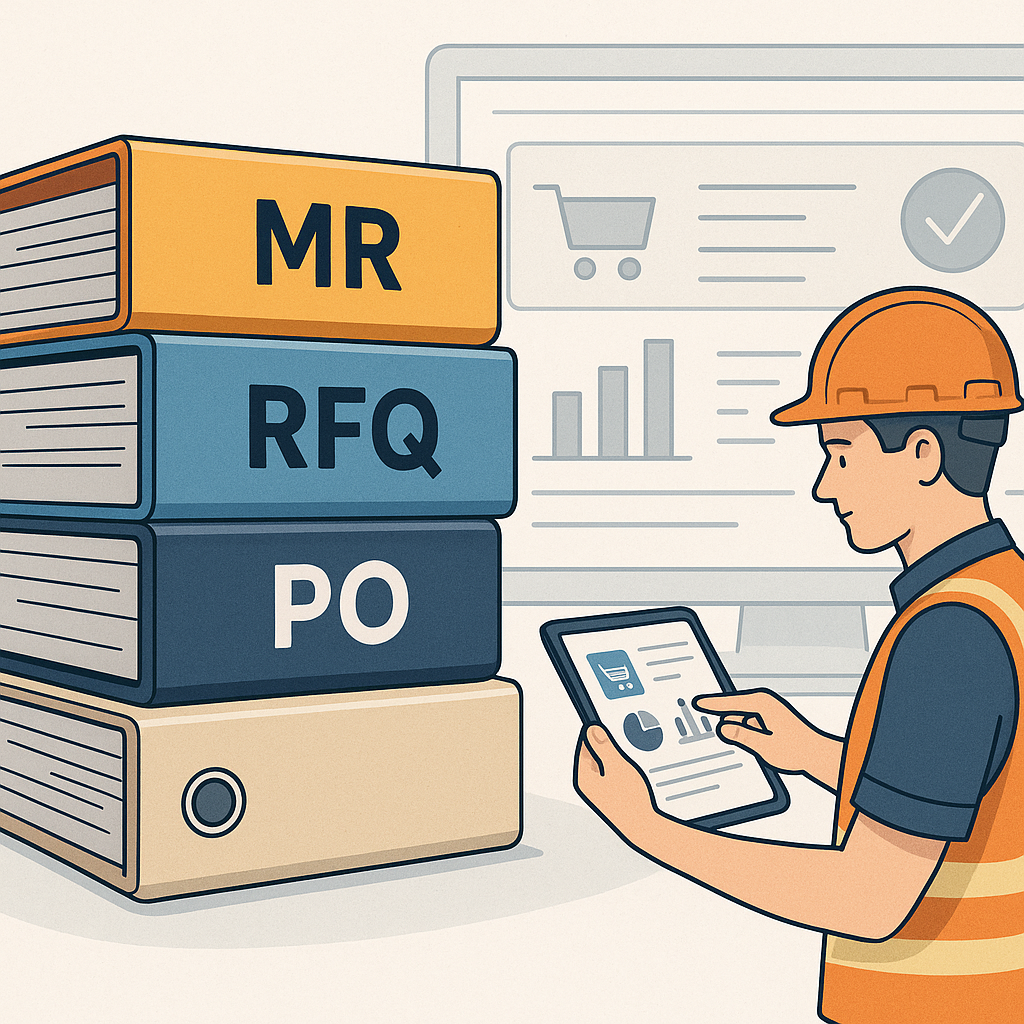
- Fits your workflow: Whether it’s MR → RFQ → PO or something else, the template aligns with your existing operations.
For example, an RFQ (Request for Quote) template should include columns for:
- Vendor name
- Material description
- Quantity
- Unit rate
- Taxes
- Delivery time
This ensures you can compare quotes side-by-side without missing critical details.
A Real Problem: Missed Vendor Comparisons
Many contractors think they’re evaluating vendor quotes properly. But in practice? They’re winging it. A vendor calls with a price, someone jots it down on paper, and by the time the PO gets issued, half the details are missing.
This is exactly where structured templates shine. Take the RFQ Comparative Statement, for example. A solid template ensures:
- Every vendor’s details are captured.
- Pricing is compared apples-to-apples (e.g., same material specs, same tax terms).
- Discounts, delivery schedules, and payment terms are documented.
Want a step-by-step guide to creating an accurate RFQ comparative statement? Check out How to Create an Accurate RFQ Comparative Statement for Contractors.
How Templates Solve Procurement Chaos
Let’s break this down practically. Here’s how a template-based process works:
- Material Requisition (MR): Your site team requests materials via a standardized MR form.
- Request for Quote (RFQ): You email RFQ templates to vendors, asking for rates, delivery timelines, and payment terms.
- Comparative Statement: Once the quotes come in, you use a template to compare them side-by-side.
- Purchase Order (PO): The PO template ensures every detail — from quantity to payment terms — is locked before sending it to the selected vendor.
It’s not rocket science, but it does require discipline. And that discipline pays off. Over time, you’ll notice fewer missed details, faster approvals, and better vendor relationships.
Common Mistakes to Avoid
Even with templates, things can go wrong. Here’s what to watch for:
- Skipping the comparative statement: Don’t issue a PO without comparing quotes first. That’s how margins bleed.
- Ignoring delivery timelines: Cheapest isn’t always best. Late delivery can sink your project schedule.
- Not tracking approvals: Every PO should have an audit trail of who approved what. Missing this creates compliance risks.
FAQ
Q: Where can I get free templates for construction procurement? A: ConstructionSupply.ai offers free, GST-ready templates for everything from RFQs to BOQs.
Q: How do I adapt templates for my specific workflow? A: Start by mapping your current process (e.g., MR → RFQ → PO). Then tweak the templates to match your approval chains and document fields.
Q: Do templates work for small contractors? A: Absolutely. Small teams benefit even more since they often lack dedicated procurement staff.
The Bigger Picture: Unified Procurement Systems
Templates are a great start, but they’re not the endgame. If you’re managing multiple projects, a unified procurement system can tie everything together — from MR to PO. Systems like ProjectsNext streamline workflows, track materials, and prevent margin leakage across projects.
If you're dealing with procurement chaos, ProjectsNext can help. Get started free →
Learn more at JobNext.ai