Why Most Construction Procurement Workflows Fail
Let’s be honest—most procurement workflows on construction sites are a mess. Either they’re too vague ("Send RFQs, pick the cheapest vendor") or so intricate that no one follows them. The result? Late orders, mismatched BOQs, and vendors who promise the moon but deliver chaos.
Here’s the hard truth: a procurement process is only as good as its weakest link. If one step falls apart—say, you forget to track vendor quotes properly—the entire sequence collapses. And when that happens, the costs pile up.
In this article, we’ll break down how to build a reliable, actionable procurement workflow that avoids these pitfalls, minimizes waste, and keeps your projects on track.
What Makes a Procurement Workflow “Work”?
A good procurement workflow isn’t just a diagram on paper. It’s actionable. It must:
- Define clear steps that anyone can follow.
- Account for real-world delays (because let’s face it, things won’t always run smoothly).
- Prevent margin erosion by locking in rates and tracking costs accurately.
- Be scalable across multiple projects and teams.
Why Actionable Steps Matter
A workflow is only useful if people actually use it. If it’s too complicated or unclear, your team will abandon it during crunch time. A clear, standardized process ensures everyone—from site supervisors to procurement managers—is aligned.
Real-World Delays: A Necessary Consideration
Construction rarely goes as planned. Weather, labor shortages, and unpredictable lead times can derail even the best-laid plans. A strong workflow accounts for these risks by building in buffers—e.g., setting internal deadlines earlier than the actual requirement date or maintaining a small inventory of critical materials.
How to Prevent Margin Erosion
Margin erosion happens when costs balloon beyond what was budgeted in the BOQ (Bill of Quantities). A robust workflow minimizes this by:
- Tracking orders and deliveries in real-time.
- Reconciling actual costs with planned costs.
- Ensuring vendors adhere to agreed terms.
Step 1: Start With a Material Requisition (MR)
Every procurement process starts with an MR. This document tells the procurement team exactly what’s needed. Without it, you’re flying blind.
Key Fields to Include in an MR:
- Item Name: Specify exactly what you need (e.g., TMT bars, M30 grade concrete).
- Quantity: How many units?
- Delivery Date: When do you need it?
- Site Location: Where should it be delivered?
- Priority Level: Is this an urgent requirement, or can it follow the standard workflow?
Common Issues With MRs and How to Fix Them:
-
Incomplete MRs: Missing details like quantity or delivery date can lead to delays. Use standardized templates to ensure consistency.
- ConstructionSupply.ai offers free MR templates that are GST-ready and easy to customize.
-
Approval Delays: If MRs require multiple levels of approval, use digital tools like Google Forms or procurement software to streamline the process.
Step 2: Send RFQs to Vendors
Once the MR is approved, it’s time to float RFQs (Request for Quotations) to vendors. This is where chaos often starts—many teams send emails or WhatsApp messages without any structure.
Actionable Steps for Sending RFQs:
- Use an RFQ Template: This ensures all vendors receive the same information, making it easier to compare quotes.
- Specify Deadlines: Communicate a clear response deadline to prevent delays.
- Request Itemized Quotes: Ask vendors to break down their pricing by item, delivery, and taxes. This simplifies comparison.
- Include Terms and Conditions: Define expectations upfront, such as penalties for late delivery or quality issues.
Why Structured RFQs Matter:
Structured RFQs prevent misunderstandings and ensure you’re comparing apples to apples. For example, vague RFQs can lead to quotes that exclude taxes or delivery charges, creating hidden costs later.
Step 3: Perform Vendor Comparisons
Vendor comparison isn’t just about picking the cheapest option (L1). You also need to evaluate:
- Lead Time: Can the vendor deliver on schedule?
- Past Performance: Have they delivered quality materials in previous projects?
- Payment Terms: Are the terms feasible for your cash flow?
- Compliance: Do they meet legal and safety standards (e.g., GST compliance, certified materials)?
How to Perform an L1-L2 Comparison
- L1 (Lowest Cost): Identify the vendor offering the lowest price.
- L2 (Total Value): Evaluate factors beyond cost, such as reliability and service quality.
For example, a vendor offering slightly higher prices but consistently delivering on time may save you money in the long run by avoiding project delays.
Step 4: Generate Purchase Orders (POs)
Once you pick a vendor, issue a Purchase Order (PO). This document formalizes the agreement and locks in terms.
What to Include in a PO:
- Vendor Details: Name, GSTIN, address.
- Item Details: Quantity, unit price, total price.
- Delivery Date: Must match the timelines agreed upon in the RFQ.
- Payment Terms: Specify conditions like "50% advance, 50% on delivery."
- Penalties: Outline penalties for late delivery or non-compliance.
Why POs Are Critical
Without a PO, there’s no formal record of the agreement, leaving room for disputes. A well-drafted PO protects both parties and ensures accountability.
Step 5: Track BOQs vs Actual Costs
Here’s where most workflows fail—they don’t track actual costs against the BOQ. If your BOQ says 5 tons of steel but you order 6, you’ve blown your margin.
Tools for Real-Time Tracking:
- ERP Systems: Platforms like ProjectsNext automatically reconcile BOQ numbers with invoices and delivery receipts.
- Excel Templates: For smaller projects, use a simple BOQ tracker to log ordered vs delivered materials.
Why BOQ Reconciliation Matters:
Ignoring BOQ reconciliation is like driving without a speedometer—you won’t know if you’re overshooting until it’s too late. Regular tracking helps identify discrepancies early.
Step 6: Monitor Vendor Performance
Your procurement workflow doesn’t end when the materials arrive. You need to evaluate whether the vendor delivered what they promised.
Metrics to Track:
- Quality: Were the materials up to spec?
- Timeliness: Did they deliver on time?
- Cost Adherence: Were there any hidden charges?
Build a Vendor Performance Scorecard
Use a simple scorecard to grade vendors on key metrics. This helps you identify reliable vendors for future projects while weeding out underperformers.
Common Mistakes to Avoid
- Skipping RFQs: Teams often skip RFQs for “urgent” purchases, leading to inflated costs and subpar materials.
- Poor Vendor Tracking: If you don’t track vendor reliability, you’ll keep making bad decisions.
- Ignoring BOQ Reconciliation: This is the fastest way to erode margins.
- Unclear POs: Missing details in POs lead to disputes and delays.
FAQ
Q: What’s the best way to create a procurement flow chart?
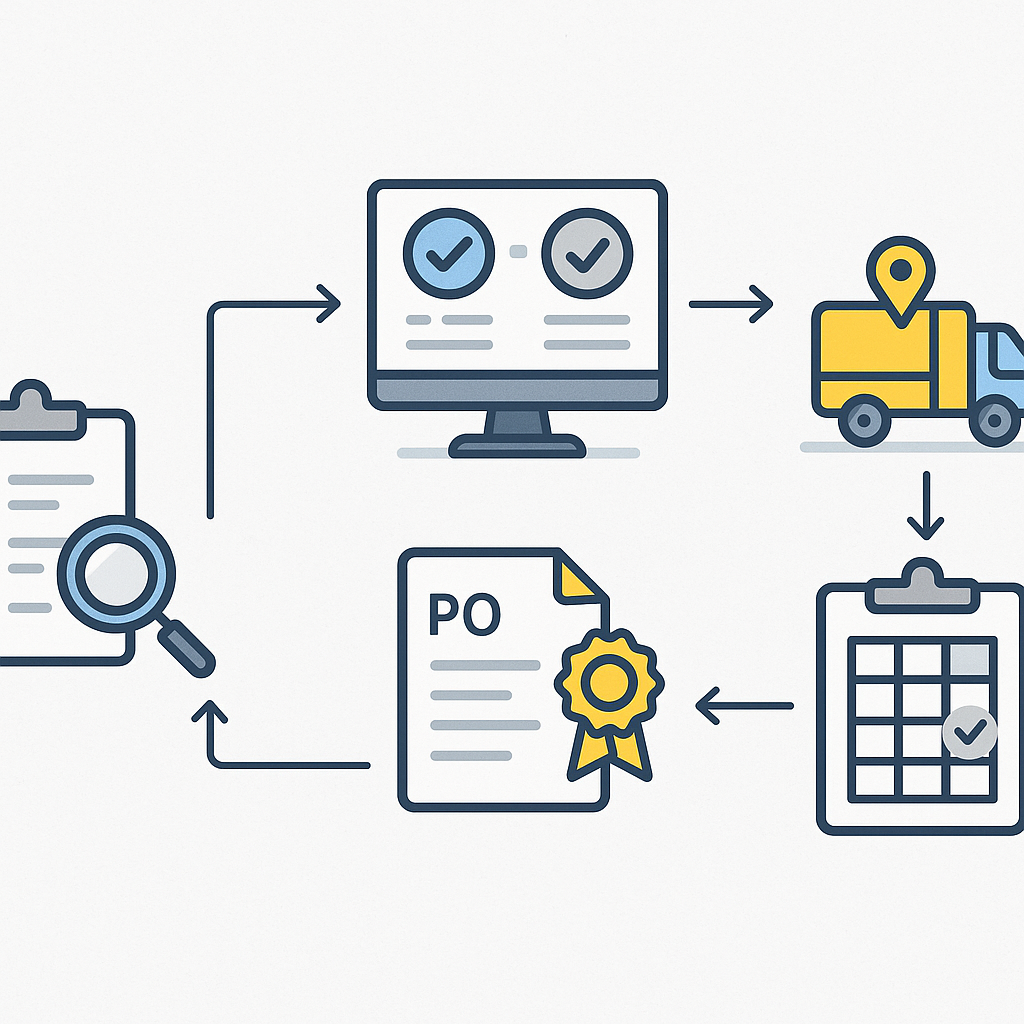
A: Use tools like Lucidchart, Miro, or even Excel. Start by mapping out each step in the workflow (MR → RFQ → PO → Delivery → BOQ tracking). Keep it simple and easy to follow.
Q: How should I handle urgent purchases?
A: Create an “emergency procurement” workflow. This should include basic checks like vendor pre-qualification and a cap on how much can be spent without an RFQ.
Q: What if vendors don’t respond to RFQs?
A: Build a pre-vetted vendor list. Focus on suppliers who’ve proven reliable in past projects. For new vendors, incentivize timely responses by communicating future business potential.
Q: How do I ensure vendor accountability?
A: Use POs and vendor scorecards. A clear PO outlines expectations, while a scorecard tracks performance over time.
Q: What tools can I use for BOQ tracking?
A: Consider ERP systems like ProjectsNext. For smaller teams, Excel or Google Sheets with automated formulas can work as well.
Comparison Table: Manual vs Automated Procurement Workflows
| Feature | Manual Workflow | Automated Workflow |
|---|---|---|
| Speed | Slow (prone to delays) | Fast (real-time tracking) |
| Error Rate | High (manual data entry issues) | Low (automated reconciliation) |
| Cost Tracking | Inconsistent | Accurate and real-time |
| Vendor Performance | Difficult to monitor | Easy with scorecards |
| Scalability | Limited | Easily scalable |
Call to Action
If your procurement process feels chaotic, ConstructionSupply.ai can help. Download free templates and start streamlining your workflow today.
Learn more at JobNext.ai