Subcontractor Management Examples: 5 Proven Strategies for Contractors
Subcontractor management sounds straightforward, doesn’t it? You sign a work order, set expectations, and let them handle their scope. But anyone who’s managed a real construction project knows it’s never that simple. Subcontractors can make or break your margins — whether it’s missed deadlines, scope creep, or unexpected claims.
Here are five subcontractor management strategies I’ve seen work in real projects. These aren’t theoretical. They’re practical approaches contractors can use today.
1. Use Measurement-Based Progress Tracking
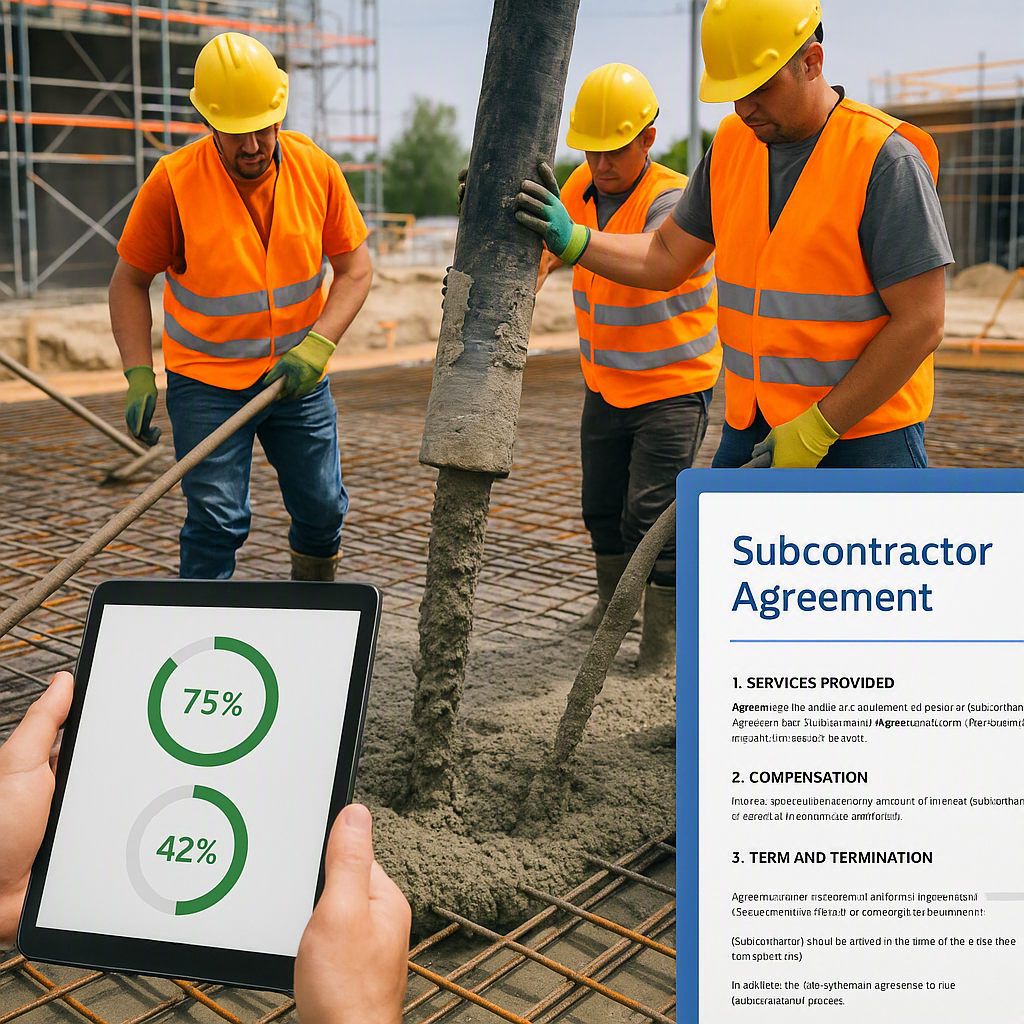
Let’s start with the most overlooked strategy. Many contractors rely on percentages or rough milestones to track subcontractor progress. That’s a mistake. Without actual measurements tied to the billable scope, you’re flying blind.
For example, say you’ve hired a subcontractor to install 1,000 meters of ductwork. Instead of approving payments based on "50% completed," tie their invoices to measured progress — say, 500 meters installed and verified. This ensures payments align with real work.
Why does this matter? Because it eliminates ambiguity. Subcontractors can’t claim more than they’ve delivered, and you avoid overpaying for work that’s incomplete.
Actionable Steps:
- Define measurable quantities upfront: Break the scope into quantifiable deliverables (e.g., meters installed, cubic meters poured).
- Validate progress regularly: Conduct site inspections to verify claims before approving payments.
- Use tech solutions: Tools like ProjectsNext offer measurement-based tracking workflows, where subcontractors submit progress reports tied to verified quantities. This reduces disputes over scope completion and ensures transparency.
2. Standardize Your Work Orders
Ever dealt with a subcontractor who "didn’t know" certain conditions in their contract? That’s usually a sign of poorly written work orders. A good work order isn’t just a piece of paper — it’s a roadmap.
Essentials of a Work Order:
- Detailed scope of work: Be specific to avoid room for interpretation.
- Unit rates and quantities: Clearly define payment terms based on measurable deliverables.
- Penalties for delays: Include clauses that incentivize timely delivery.
- Payment terms: Specify retention clauses and timelines for payment.
- Compliance requirements: GST, TDS, insurance, and other legal obligations.
Standardizing your work orders ensures subcontractors know exactly what they’re signing. It also protects you if disputes arise.
Practical Tips:
- Build templates: Create pre-approved templates for work orders to maintain consistency.
- Include retention clauses: Always hold back a percentage (usually 5-10%) until the final scope is verified. This protects you against poor-quality work.
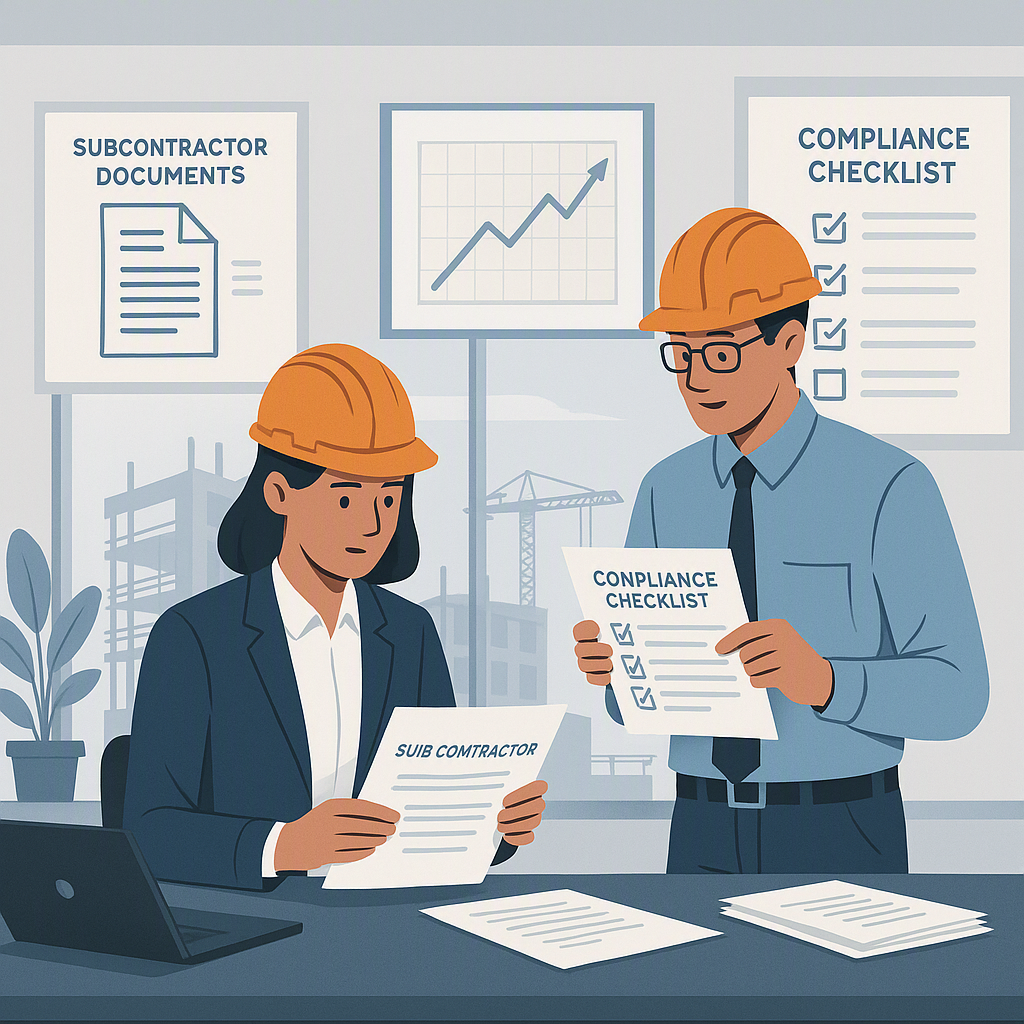
- Legal review: Have contracts reviewed by a legal professional to ensure full compliance with local regulations.
3. Implement Approval Chains
Subcontractor invoices can quickly turn chaotic if there’s no approval process. You might think, "I’ll just approve it myself." But what happens when you’re managing ten concurrent projects?
Approval chains solve this. For example, you can structure approvals like this:
- Site engineer: Verifies completed work against the scope.
- Project manager: Validates progress reports and checks BOQ alignment.
- Finance team: Ensures compliance with GST, TDS, and other deductions.
- Operations head: Grants final approval for payment release.
Benefits of Approval Chains:
- Reduces errors and overpayments.
- Adds accountability at every level.
- Ensures compliance and scope adherence.
Actionable Steps:
- Define roles: Clearly assign approval responsibilities within your team.
- Use digital workflows: Tools like ProjectsNext support multi-level approval chains, reducing manual follow-ups.
- Communicate process: Ensure subcontractors understand the approval structure upfront. This avoids delays and disputes.
4. Track Scope Creep
Scope creep is the silent killer of subcontractor budgets. What starts as a simple contract can balloon into extra work, additional claims, and inflated invoices.
How to Prevent Scope Creep:
- Define the scope clearly upfront: A vague "installation of equipment" clause leaves room for interpretation. Be specific about what’s included.
- Document changes immediately: If you agree to extra work, formalize it in writing with a revised work order.
- Monitor actual costs vs BOQ: Many contractors only realize they’ve overspent when it’s too late.
Actionable Steps:
- Use BOQ tracking tools: Real-time BOQ tracking tools help compare subcontractor invoices against the original scope.
- Conduct regular budget reviews: Schedule weekly reviews to monitor alignment between scope and actual costs.
- Train your team: Educate site engineers and project managers on identifying potential scope creep early.
5. Build Subcontractor Scorecards
Not all subcontractors are equal. Some deliver on time, stay within budget, and follow compliance rules. Others… don’t. The best way to separate the good from the bad? A scorecard.
Key Metrics for Scorecards:
- Timeliness: Did they meet deadlines?
- Quality: Were there reworks or complaints?
- Budget adherence: Did they stick to agreed costs?
- Compliance: Were GST/TDS filings accurate?
Scorecards aren’t just for reference. They’re leverage. When subcontractors know you’re tracking their performance, they’re less likely to cut corners.
Actionable Steps:
- Build a template: Create a simple Excel template with standardized metrics.
- Use digital tools: ERP systems like ProjectsNext can automate scorecard tracking.
- Review performance regularly: Conduct quarterly reviews and use data to inform future hiring decisions.
Comparison Table: Digital vs Manual Subcontractor Scorecards
| Metric | Manual Scorecards | Digital Tools (ERP) |
|---|---|---|
| Timeliness Tracking | Requires manual updates | Automated reminders and updates |
| Compliance Checks | Prone to errors | Integrated GST/TDS compliance |
| Historical Data Access | Limited | Easily accessible |
| Time Efficiency | Time-consuming | Streamlined workflows |
Common Mistakes to Avoid
1. Overpaying for Partial Work
Never pay invoices upfront without verifying progress. Subcontractors can promise the moon but deliver far less.
2. Ignoring Compliance
Missing GST/TDS filings can lead to penalties. Always track subcontractor compliance — especially in large projects.
3. Vague Contracts
A poorly defined work order is asking for disputes. Spend time drafting clear, detailed contracts.
4. Skipping Retention Clauses
Retention protects you from poor-quality work. Always hold back 5-10% until the final scope is verified.
5. Lack of Real-Time Tracking
If you’re not monitoring subcontractor costs against BOQ daily, you’re risking margin erosion.
FAQ
Q1: How do I handle disputes with subcontractors?
Start with the contract. If the scope, penalties, and payment terms are clearly defined, you have leverage. For larger disputes, mediation is often faster than litigation.
Q2: What’s the best way to track subcontractor progress?
Use measurement-based tracking tied to quantities (e.g., cubic meters poured, meters installed). Avoid percentage completions — they’re subjective.
Q3: How do I find reliable subcontractors?
Build a performance scorecard and track metrics like timeliness, quality, and compliance. Use past data to decide whom to hire.
Q4: Should I use software to manage subcontractors?
If you’re handling multiple projects, yes. Tools like ProjectsNext streamline workflows from work orders to billing.
Q5: What are retention clauses, and why are they important?
Retention clauses hold back a percentage of payments (usually 5-10%) until work is fully verified. They protect you from incomplete or poor-quality work.
Conclusion
Subcontractors play a critical role in construction projects. But mismanagement can erode your margins and delay timelines. From measurement-based tracking to standardized work orders, these strategies keep subcontractors accountable and your projects profitable.
If you’re struggling with subcontractor management chaos, ProjectsNext can help. Get started free →.
Learn more at JobNext.ai