The Assumption: ERP Systems Are Overkill for Small Contractors
For years, I thought ERP systems were only for big players — companies running dozens of projects with massive budgets. Small contractors? We didn’t need all that complexity. A shared Excel sheet, WhatsApp messages, and a few phone calls were good enough to manage material procurement. Or so I thought.
Turns out, I was wrong. Let me explain why.
The Problem That Changed My Mind
It was a project back in 2021 — a mid-size interior fit-out job in Mumbai. Just ₹3 crore in scope, so nothing massive. We ordered materials as needed, using the same old system: site engineers would send WhatsApp requests, we'd call vendors for quotes, and purchase orders were created manually in Excel.
One day, we realized a ₹12 lakh overrun in gypsum board procurement. How?
Key Issues:
- Duplicate orders: Site engineers didn’t check existing stock before requesting more material.
- Vendor price creep: Without rate contracts in place, vendors quietly increased prices by 5-8% over a three-month period.
- Approval delays: WhatsApp requests sat unread for days because the project manager was traveling. By the time approvals came through, delivery timelines slipped, and we had to pay premiums for urgent orders.
That ₹12 lakh was pure margin erosion. And it wasn’t an isolated incident. Across five projects that year, we saw similar patterns — procurement chaos leading to wasted material, higher costs, and delayed timelines.
Why the Old System Survives
To be fair, small contractors avoid ERPs for valid reasons:
- They seem expensive: Many contractors assume ERP systems cost lakhs in licenses and implementation fees. The fear of upfront costs often overshadows potential long-term savings.
- Fear of complexity: ERP software is often seen as intimidating and overengineered for small teams.
- “We’re managing fine”: When margins are tight, it’s hard to justify spending on software if you’re still meeting deadlines (even if inefficiencies are quietly adding up).
These arguments make sense on paper, but here’s the catch: sticking to manual systems doesn’t mean you’re saving money. It just means you’re not seeing where you’re losing it.
What ERP Does Differently: The Procurement Workflow Example
ERP systems streamline and structure workflows that are typically chaotic in smaller operations. Here’s how an ERP system like ProjectsNext addresses the exact problems small contractors face:
1. Structured Material Requests (MRs):
Instead of WhatsApp messages or verbal requests, ERPs use a formal Material Request (MR) workflow. Site engineers raise requests through the system, selecting materials from a predefined catalog. The system automatically checks existing stock and flags duplicates.
Actionable Steps:
- Build a catalog of frequently used materials in your ERP.
- Train site engineers to search stock levels before raising new requests.
- Use automated notifications to alert the procurement team of new requests.
2. RFQ (Request for Quotation) and Vendor Comparison:
When an MR is approved, it triggers an RFQ. Vendors submit offers directly through the system, and their quotes are compared side-by-side. No more chasing down emails or manually building comparison sheets.
Actionable Steps:
- Preload vendor profiles into the ERP system, including contact details and past performance data.
- Use RFQ templates that standardize quote submissions.
- Leverage automated ranking tools to highlight the most cost-effective vendor.
3. Rate Contracts and Alerts:
ERPs store rate contracts with vendors, ensuring you always pay agreed prices. If a vendor submits a higher quote, the system flags it immediately.
Actionable Steps:
- Negotiate fixed-rate contracts with key vendors for frequently used materials.
- Configure alerts to notify procurement teams of price discrepancies.
4. Approval Workflows:
Approval chains are built into the ERP, with notifications sent to the right people. If someone is unavailable, the system escalates approvals to the next level — no more delays because your project manager is on leave.
Actionable Steps:
- Define approval hierarchies in the system during setup.
- Enable alternate approvers for scenarios where primary approvers are unavailable.
- Use mobile-friendly dashboards to approve requests on the go.
5. Real-Time Tracking:
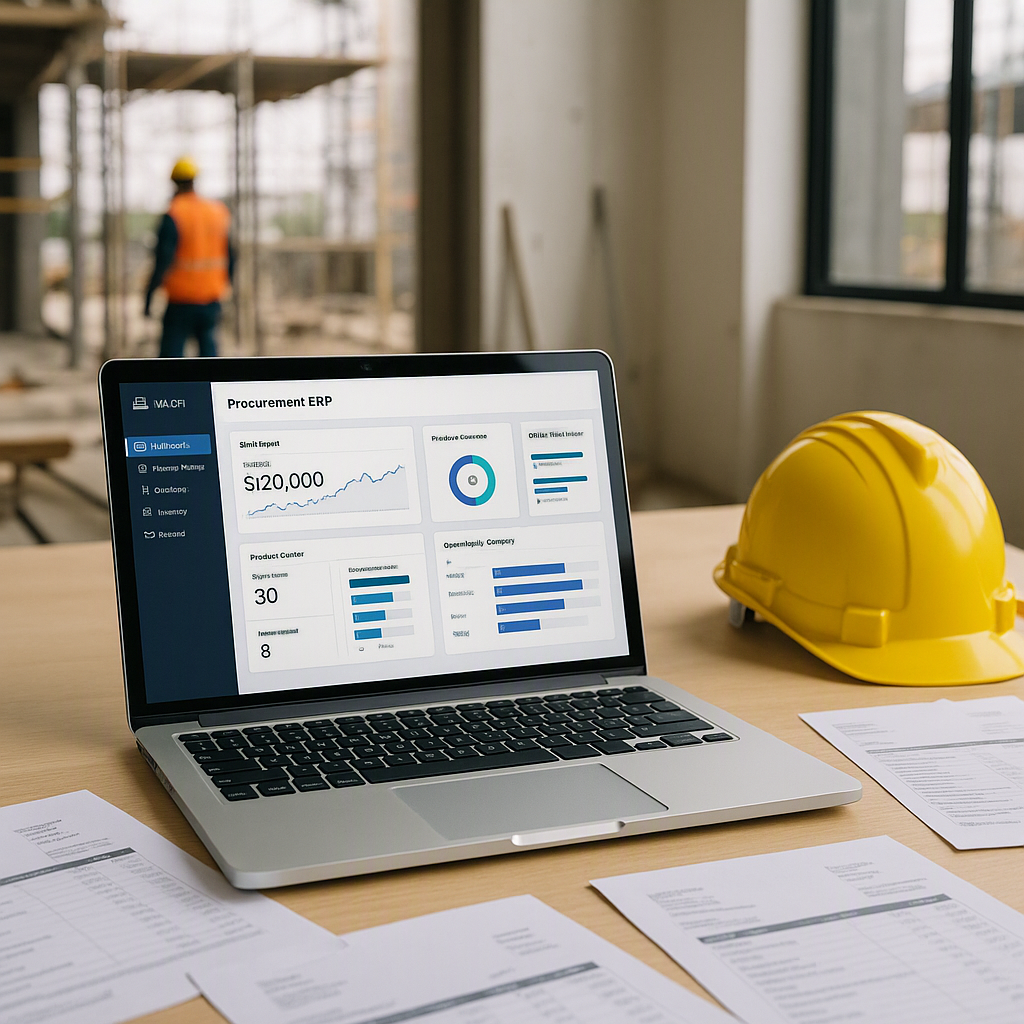
Every MR, RFQ, and PO (purchase order) is tracked in real time. You can see exactly what’s been ordered, from whom, at what rate, and when it’s due to arrive. This visibility alone can prevent costly reorders or delivery disputes.
Actionable Steps:
- Use centralized dashboards to monitor procurement activity across all projects.
- Run weekly reports to identify outliers in costs or delivery timelines.
What Happens Without This Structure?
Let’s go back to that ₹12 lakh overrun. With an ERP system in place, we would’ve:
- Caught duplicates early: The system would’ve flagged that gypsum board was already in stock.
- Locked vendor prices: Rate contracts would’ve prevented vendors from hiking prices mid-project.
- Avoided approval delays: Automated workflows would’ve ensured MRs were approved on time.
Instead, we lost 8% of our project’s value to inefficiencies. Multiply that across five projects, and the numbers get scary fast.
Real-Time Cost Tracking: The Silent Profit Saver
One underrated benefit of ERP systems is real-time cost tracking. Many contractors don’t realize how much they’re overspending until the project is over. By then, it’s too late to fix.
An ERP system ties every procurement decision back to your BOQ (Bill of Quantities), so you can see whether you’re under or over budget in real time. If material costs are creeping up, you’ll know immediately — not three months later when your accountant closes the books.
For a deeper dive into how real-time dashboards improve profitability, check out this blog post from ProjectsNext.
What’s Still Not Perfect?
To be honest, ERPs aren’t magic. They require:
- Initial setup time: Uploading your vendor database, configuring workflows, and training your team takes effort.
- Discipline: If site engineers don’t use the system properly, even the best ERP can’t prevent waste.
But the cost of doing nothing is higher. A few hours spent configuring an ERP system can save lakhs in material waste and procurement delays.
FAQs
1. Is ERP software really affordable for small contractors? Yes. Many modern ERP systems are cloud-based, with subscription models starting at a few thousand rupees per month. You don’t need a custom-built solution.
2. What if my team isn’t tech-savvy? Most ERPs are designed with user-friendly interfaces. Plus, training modules are often part of the package. The learning curve isn’t as steep as you might think.
3. How do I choose the right ERP for my business? Look for systems that cater specifically to contractors and include features like procurement workflows, BOQ integration, and real-time cost tracking. Avoid generic ERPs that lack construction-specific tools.
4. What’s the ROI of adopting an ERP system? While upfront costs exist, the ROI often includes reduced material waste, better vendor negotiations, and improved project timelines — all of which directly impact profitability.
5. Can ERP systems scale with my business? Yes. Most modern ERPs are modular, meaning you can start with core features and expand functionality as your business grows.
Decision Framework: Should You Invest in ERP?
| Factor | Manual System | ERP System |
|---|---|---|
| Cost | Low upfront costs but high hidden inefficiencies | Higher upfront cost, long-term savings |
| Ease of Use | Familiar tools like Excel and WhatsApp | User-friendly interfaces with training options |
| Scalability | Limited scalability | Highly scalable, grows with business |
| Procurement Accuracy | Prone to errors (duplicate orders, price creep) | Structured workflows prevent errors |
| Real-Time Visibility | Limited | Comprehensive dashboards |
Final Thought
If you’re managing material procurement with WhatsApp and Excel, you’re leaving money on the table. It’s that simple. ERP systems aren’t just for massive contractors. Small and mid-sized firms can benefit just as much — if not more — from structured workflows, real-time tracking, and automated approvals.
If you're ready to fix your procurement chaos, ProjectsNext can help. Start optimizing your workflows today.
Learn more at JobNext.ai