How to Master Subcontractor Management in Construction Without Oversights
Subcontractors are the backbone of any construction project. But let’s face it—managing them can feel like juggling knives. One slip, and you’re bleeding money, time, or both.
So how do you ensure every subcontractor delivers on time, within budget, and in compliance with your project requirements? It starts with ditching the chaos and building a system. And no, a WhatsApp group and a shared Excel sheet won’t cut it.
In this guide, we’ll cover:
- Why subcontractor mismanagement happens
- The hidden costs you’re probably absorbing
- A practical framework for managing subcontractors without oversights
- Tools that simplify this process
- Frequently asked questions and actionable answers
Let’s dive in.
Why Subcontractor Mismanagement Happens
Ever wonder why subcontractor issues keep cropping up despite having a "system" in place? Here’s why:
1. Ambiguous Work Orders
If your work orders are vague, you’re inviting scope creep. "Fix the plumbing" isn’t the same as "Install 150 meters of CPVC piping as per IS 15778 standards." Without detailed work orders, subcontractors are left guessing, which leads to mismatched expectations and costly reworks.
2. Lack of Progress Tracking
Subcontractors often work across multiple sites. Without a clear system to track their progress, you’re relying on verbal updates—and let’s be honest, those updates are rarely accurate. Missing deadlines or milestones happens frequently, and you may not even realize it until it’s too late.
3. Payment Delays
Missed payments lead to strained relationships and even project delays. Many contractors fail to link payments to measurable milestones, opening the door to disputes. Subcontractors are far less likely to prioritize your project if they’re worried about when they’ll get paid.
4. Compliance Gaps
Are you tracking GST, TDS, and statutory deductions (PF, ESI) for each subcontractor? If not, you’re setting yourself up for penalties. Non-compliance doesn’t just hurt your subcontractors; it can tank your project’s profitability.
The Hidden Costs of Poor Subcontractor Management
Subcontractor mismanagement doesn’t just hurt your reputation; it eats into your margins. Here’s how:
Material Wastage
When subcontractors order more materials than needed to "play it safe," it directly impacts your bottom line. Excess materials often go unused or are wasted due to poor storage practices.
Rework Costs
Ambiguities in scope and unclear instructions lead to errors. Fixing these mistakes costs time and money, both of which could have been avoided with better upfront communication.
Lost Time
Delays cascade. When one subcontractor is late, it often pushes back other trades, creating a domino effect that disrupts the entire project timeline.
Disputes
Without clarity in contracts and progress tracking, disputes over payments or scope become a common headache. Legal battles and arbitration can further drain your resources.
A Practical Framework for Subcontractor Management
Here’s a step-by-step framework to keep things under control:
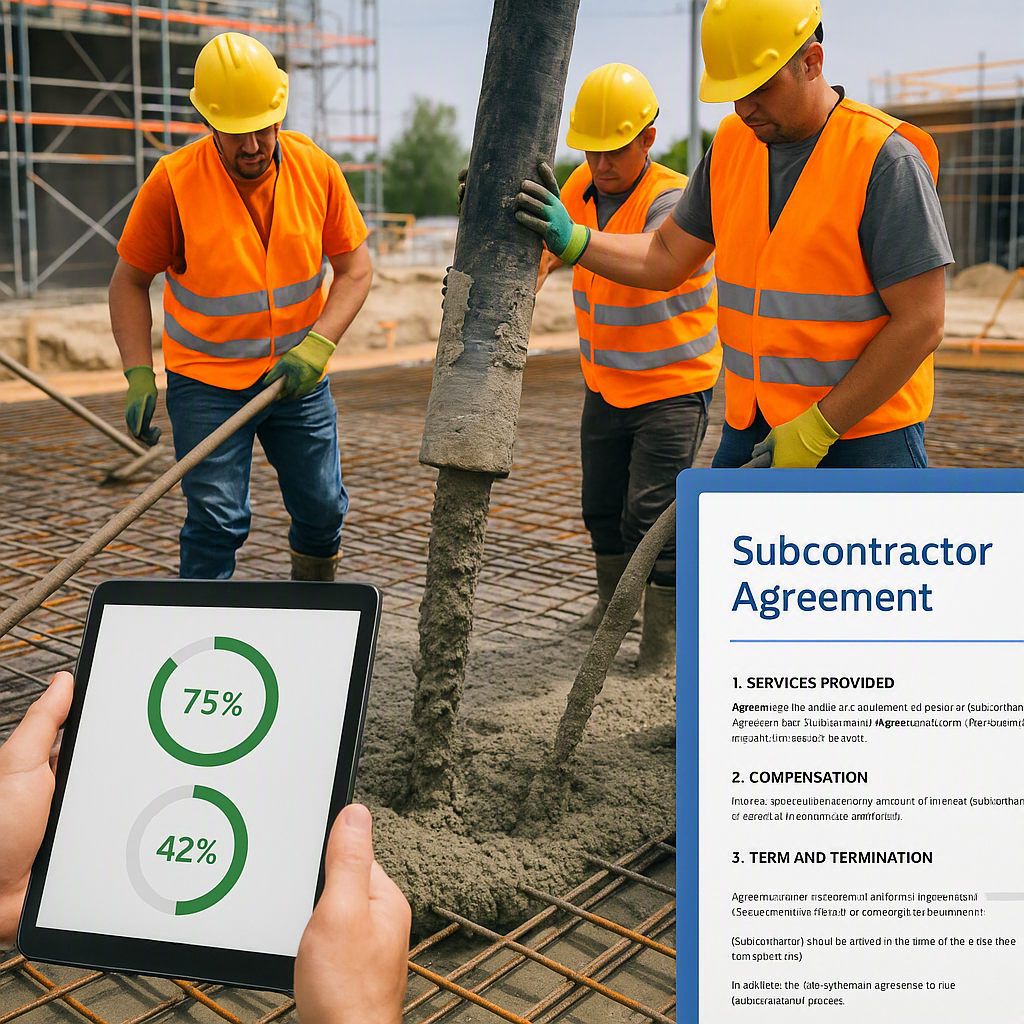
1. Start with Detailed Work Orders
Your work orders should leave no room for interpretation. Include:
- Scope: Provide a detailed description of the work. (E.g., "Install 120 sqm of vitrified tiles, 600x600mm, as per IS 15622.")
- Milestones: Break the work into measurable phases. Avoid vague timelines like "week 1"—use concrete deliverables such as "10 sqm installed and grouted by 15th October."
- Penalty Clauses: Add clear terms for delays or non-compliance (e.g., "Penalty of 1% contract value for every day of delay beyond the agreed milestone date.")
- Payment Schedule: Tie payments to milestones, not loosely defined timelines.
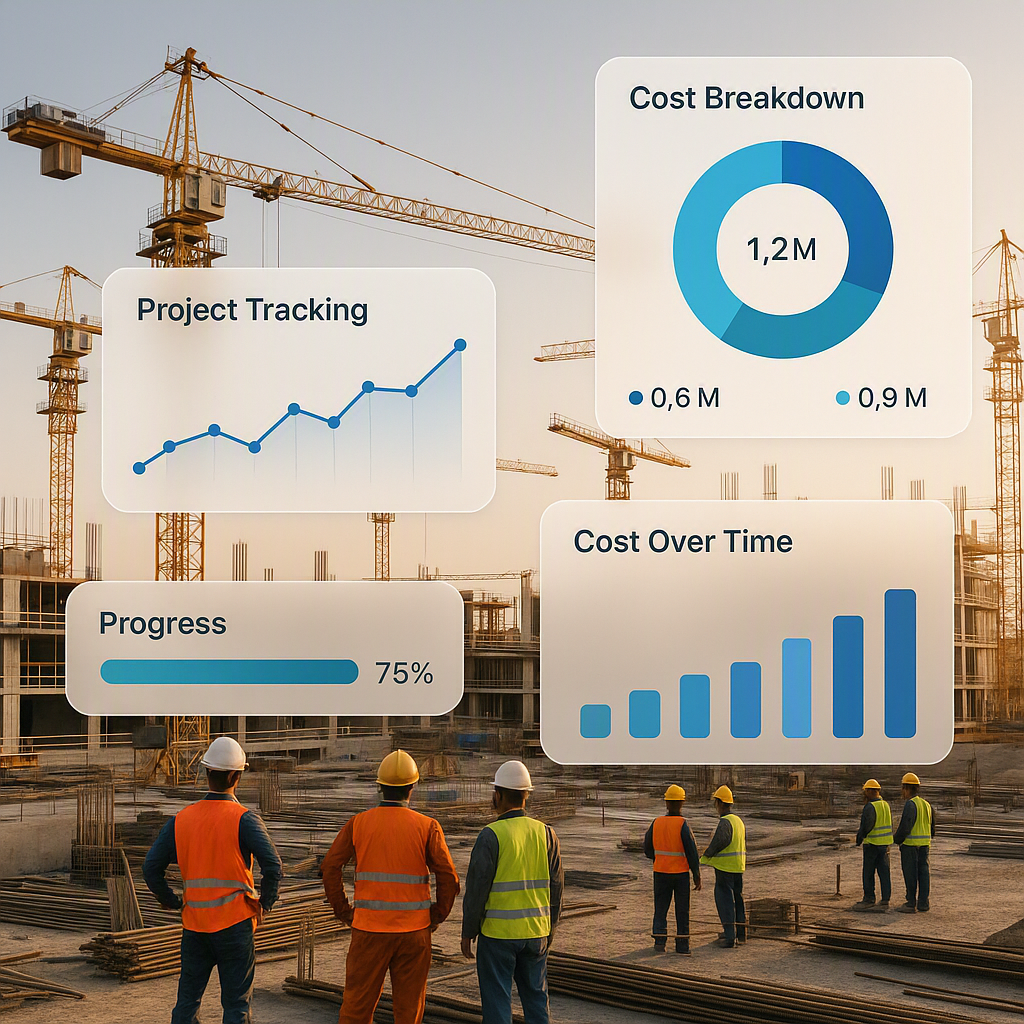
2. Track Progress in Real Time
Manual site logs are outdated. Instead, use structured workflows in subcontractor management software to track progress against milestones. For example:
- Work Request (WR): Define the job and assign it to a subcontractor.
- Work Order (WO): Issue a formal contract with scope, rates, and timelines.
- Measurement Sheets: Record actual progress on-site and compare it to milestones.
When everything is logged digitally, discrepancies or delays can be identified early. Tools like ProjectsNext excel at creating workflows that integrate with measurement sheets and dashboards.
3. Automate Payment Linking to Milestones
Payment disputes often arise because there’s no clear link between progress and payouts. Implement a system that requires milestone approvals before releasing payments.
For example, if a subcontractor completes 50% of their scope, the system automatically generates a payment request for that percentage. This ensures transparency and avoids guesswork.
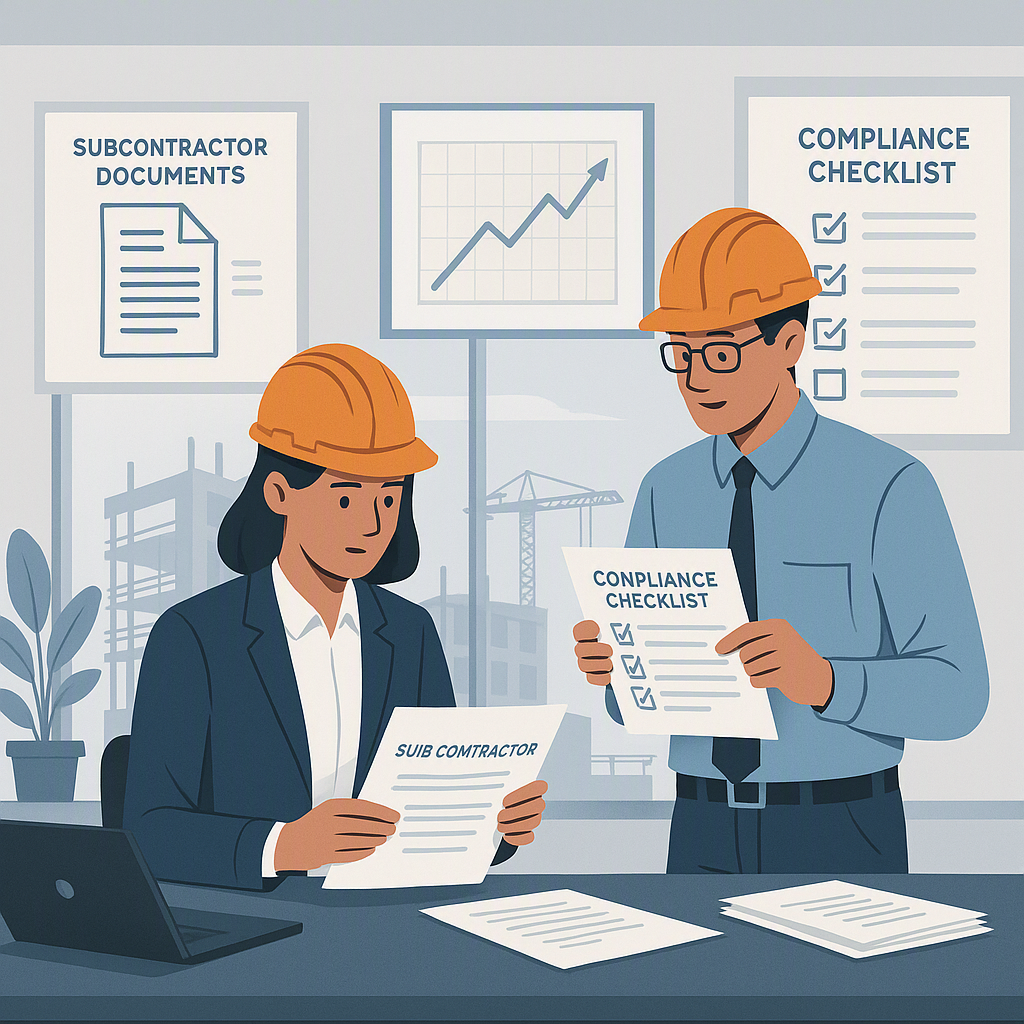
4. Ensure Compliance
Compliance with statutory and tax obligations is non-negotiable. Use software that:
- Validates GST and TDS deductions automatically.
- Tracks statutory deductions like PF and ESI for subcontractors.
- Generates compliance reports for audits.
Tools That Simplify Subcontractor Management
Effective subcontractor management requires robust tools. A good solution should offer:
| Feature | Why It’s Important |
|---|---|
| Structured Workflows | Simplifies job assignments and tracking |
| Real-Time Dashboards | Provides visibility into progress and finances |
| Compliance Automation | Reduces the risk of penalties |
| Integrated Payments | Ensures timely payouts linked to milestones |
Platforms like ProjectsNext consolidate these features into one system, eliminating the chaos of disconnected tools.
Common Mistakes to Avoid
Here’s what not to do:
- Skipping Milestones: Never release payments without measurable progress. Milestones are essential for accountability.
- Vague Contracts: Ambiguity in contracts leads to disputes. Be specific.
- Manual Tracking: Spreadsheets are fine—until you’re managing multiple sites and subcontractors.
- Ignoring Compliance: GST penalties and statutory violations can cripple your project.
FAQ
Q: How do I create a detailed subcontractor work order?
A: Include the scope, milestones, payment terms, and penalty clauses. Templates are available on ConstructionSupply.ai.
Q: What’s the best way to track subcontractor progress?
A: Use a digital tool that lets you log and visualize progress against milestones in real time. This minimizes delays and disputes.
Q: How do I ensure subcontractor compliance with GST and TDS?
A: Automate it using tools like ProjectsNext, which handle GST and TDS tracking seamlessly.
Q: How can I prevent subcontractor disputes?
A: Clarity is key. Use detailed work orders and link payments directly to milestones to avoid miscommunication.
Q: Is subcontractor management software expensive?
A: Not necessarily. Many platforms offer scalable pricing based on your project size. The cost is usually offset by the savings in time and reduced disputes.
Ready to Take Control of Subcontractor Management?
If you’re tired of juggling spreadsheets and chasing updates, it’s time to upgrade. ProjectsNext simplifies subcontractor management with structured workflows, compliance automation, and real-time tracking. Get started free →
Learn more at JobNext.ai