Procurement Chaos: Why It Happens and How to Fix It
Every contractor has been there—missing POs, late RFQs, and materials showing up two weeks after they were needed. It’s frustrating, but more importantly, it’s expensive. Procurement inefficiencies can lead to significant cost overruns and delays.
So what’s the solution? Structure. A clear, repeatable workflow that takes the guesswork out of procurement. Today, we’ll walk you through how to create one, step by step. And yes, we’ve included a free PDF template to get you started—download it here.
Step 1: Start with Material Requisition (MR)
The MR is your request for materials. It’s where everything begins. A good MR isn’t just a shopping list—it’s detailed enough to prevent misunderstandings later. Include:
- Item name and specification (e.g., TMT bars, Fe500 grade, 12mm diameter)
- Quantity
- Delivery timeline
- Budget estimate
Many teams underestimate the importance of budget estimates. If your MR doesn’t include a ballpark cost, you risk blowing your margins before you even send the RFQ.
Common Mistake
Leaving specifications vague. If you ask for “cement” without specifying grade or type, you’re inviting confusion and delays. Be precise.
Step 2: Move to RFQ (Request for Quotation)
Once your MR is approved, it’s time to send out RFQs. This is where you ask vendors for pricing and terms. A solid RFQ should include:
- MR details (copy-paste them to maintain traceability)
- Payment terms
- Delivery conditions
Pro Tip
Use standardized templates for RFQs. This eliminates ambiguity and speeds up vendor responses. We’ve created a detailed RFQ template you can download for free here.
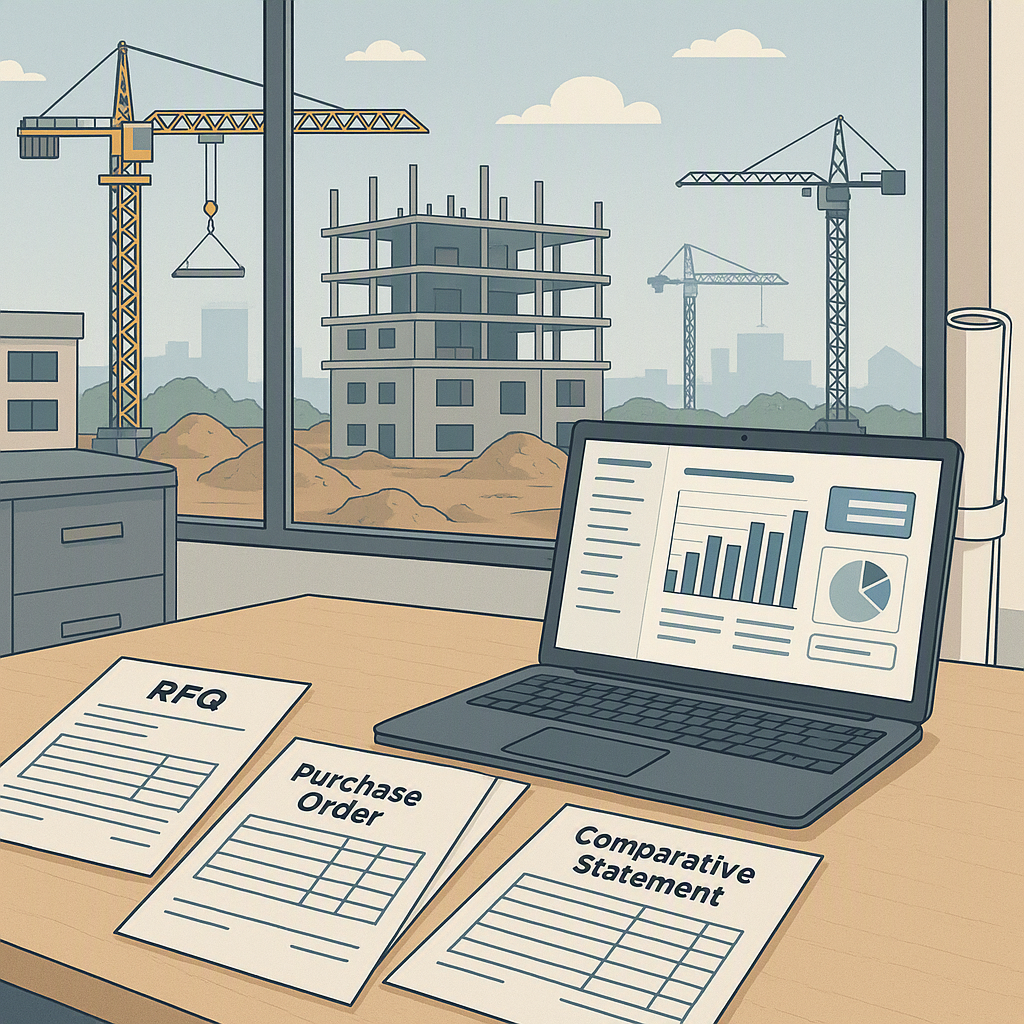
Step 3: Vendor Offers and Comparative Statement
Here’s where things often go wrong. You receive quotes from vendors but don’t compare them properly. Or worse, you pick the cheapest option without checking terms. A Comparative Statement (CS) is non-negotiable for this step.
How to Structure a CS
| Vendor | Item | Unit Rate | Payment Terms | Delivery Timeline | Total Cost |
|---|---|---|---|---|---|
| Vendor A | TMT Bars | ₹58,000/MT | 30 days credit | 3 weeks | ₹5,80,000 |
| Vendor B | TMT Bars | ₹60,000/MT | 60 days credit | 2 weeks | ₹6,00,000 |
| Vendor C | TMT Bars | ₹57,000/MT | Advance payment | 4 weeks | ₹5,70,000 |
What to Watch For
Don’t just focus on the unit rate. Payment terms and delivery timelines can make or break the deal. Vendor C’s lower rate might look tempting, but advance payment and late delivery could hurt your cash flow and project schedule.
Step 4: Issue Purchase Orders (POs)
Once you’ve finalized the vendor, it’s time to issue a PO. This document locks in the purchase details and terms. Ensure your PO includes:
- Vendor and buyer details
- Item details (same as MR)
- Agreed rate and terms
Why POs Matter
If something goes wrong—late delivery, defective materials, wrong quantities—your PO is your legal safety net. Without it, you have no leverage.
Step 5: Monitor Delivery and Payment
This step sounds simple, but it’s where things often slip through the cracks. Did the materials arrive on time? Were they inspected for quality? Was the invoice paid within agreed terms?
How to Track It
Using tools that include real-time dashboards for tracking delivery and payments can help. You can monitor everything from MR to invoice from one system. This helps prevent delays and disputes.
FAQ
1. What if vendors don’t reply to the RFQ on time?
Follow up early and often. Sometimes vendors miss emails or forget deadlines. A quick phone call can save you days.
2. How do I handle disputes over quality?
Always inspect materials upon delivery. Document any issues with photos and written reports. Share these with the vendor and refer back to your PO terms.
3. Can I automate this workflow?
Yes. Platforms like ProjectsNext offer structured MR → RFQ → CS → PO workflows with built-in approval chains. It’s worth exploring if your team is drowning in manual processes.
4. What’s the biggest mistake contractors make in procurement?
Skipping the CS step. Picking a vendor without comparing offers properly leads to inflated costs and poor terms.
Common Mistakes to Avoid
- Skipping documentation: Every step needs a paper trail. MR, RFQ, CS, POs—it’s your insurance.
- Ignoring payment terms: Don’t just look at rates. Poor payment terms can wreck your cash flow.
- Overloading one team member: Procurement needs collaboration. Don’t dump the entire process on one person.
Call-to-Action
If you’re struggling with procurement chaos, structured workflows like the one above can save you time and money. Platforms like ConstructionSupply.ai simplify the process with free templates and tools. Get started now →
Learn more at JobNext.ai