Why Contractors Struggle With Profitability
Margins in construction are razor-thin. For most small to mid-size contractors, even a 5% overrun can turn a profitable project into a loss. We’ve seen this firsthand, tracking data across 150+ projects. The biggest culprits? Poor cost tracking, delayed purchase orders, and chaotic vendor management.
Here’s the kicker: 12-18% of material budgets are wasted on inefficiencies. That’s not us speculating — it’s backed by real-world data we analyzed at JobNext.
But what if you could fix this? What if every rupee spent on materials was tracked in real-time, and procurement mistakes were caught before they happened? That’s where AI tools step in.
How AI Improves Cost Tracking in Construction
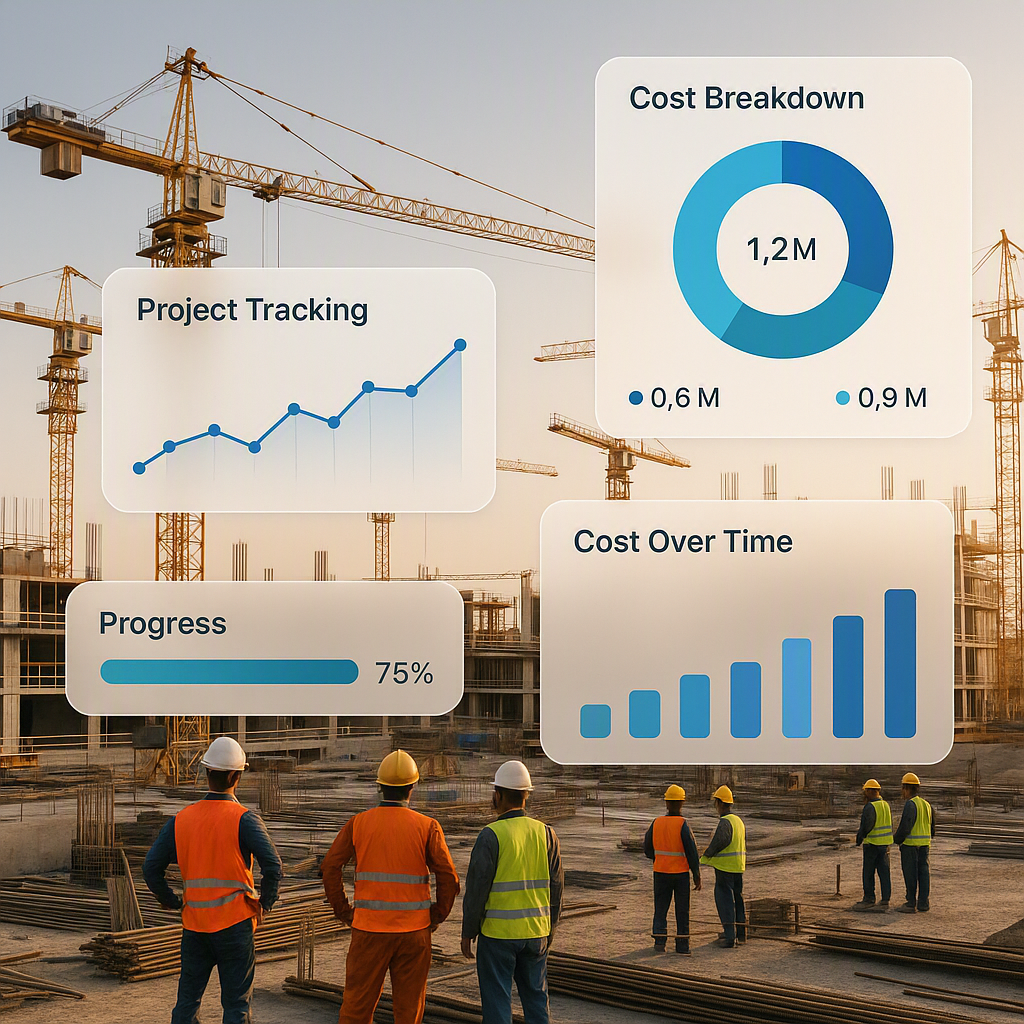
AI isn’t just for flashy tech companies. In construction, it’s solving one of the industry’s oldest problems: visibility. Most contractors don’t know they’re losing money until a project ends. By then, it’s too late. AI-powered cost tracking flips this script.
Case in Point: Real-Time BOQ Monitoring
Let’s say you’re working on a high-rise project. Your BOQ (Bill of Quantities) includes 20 tons of steel for the foundation. But delays in procurement mean you’re buying it in small batches at fluctuating prices. By the time the foundation is done, you’ve overpaid by 10%. Multiply that across materials, and you’ve just lost lakhs.
Now imagine an AI-driven system monitoring this in real-time. JobNext’s BOQ tracking, for instance, flags discrepancies immediately. If your purchase price exceeds the estimate, it alerts your team before the PO is finalized. We’ve seen contractors reduce material waste by 15% using this feature alone.
The MR → RFQ → PO Workflow: Why Structure Matters
Here’s the problem with manual procurement: it’s chaotic. Material Requests (MRs) get delayed, Requests for Quotes (RFQs) are inconsistent, and Purchase Orders (POs) often lack proper approvals. This isn’t just inefficient — it’s expensive.
AI tools like JobNext enforce a structured workflow:
- Material Request (MR): Site teams raise precise requests tied to the BOQ.
- Request for Quote (RFQ): Vendors are automatically shortlisted based on historical performance.
- Purchase Order (PO): AI ensures approvals are in place and costs align with estimates.
The result? Faster procurement, fewer errors, and tighter cost control. This blog from JobNext explains why manual procurement is bleeding margins — and how structured workflows solve it.
Why Real-Time Visibility Translates to Profit
You might be thinking: “This sounds great in theory, but does it actually work?” Let’s look at the numbers.
- 15% Material Cost Savings: Contractors using AI-driven procurement tools report saving up to 15% on materials. That’s the difference between breaking even and turning a profit.
- 6x Faster Approvals: Automated workflows cut approval times from days to hours. Faster approvals mean fewer project delays.
- Real-Time Profitability Tracking: Tools like JobNext let you see exactly how much you’re spending vs. earning — across all active projects.
When you combine these benefits, the impact on profitability is undeniable. AI tools don’t just save money; they give you control.
What If You’re Not Ready for Full AI Adoption?
We get it. Switching to new systems can feel overwhelming. But you don’t have to go all-in from day one. Start small. Begin with AI-driven procurement or cost tracking on just one project. Once you see the results, scaling becomes easier.
The biggest mistake contractors make? Sticking with spreadsheets and manual workflows because “it’s how we’ve always done it.” That mindset costs lakhs every year. This article explains why contractors who skip cloud ERP are at a disadvantage.
Bottom Line: AI Tools Aren’t Optional Anymore
If you’re serious about improving project profitability, ignoring AI isn’t an option. Tools like JobNext are already helping contractors in India and the GCC save 12-18% on material costs. The question isn’t whether AI can help your business. It’s whether you’re ready to stop losing money.
Want to see how it works? Check out JobNext’s platform to learn more about structured procurement workflows and real-time cost tracking.
Ready to see JobNext in action?
Multi-tenant SaaS ERP for construction, facilities management, and contracting — covering preconstruction, project execution, procurement, HR & payroll, equipment, finance, and 150+ analytics reports.
Get Started Free →Learn more at JobNext.ai