The Problem: Vendor Management in Chaos
Imagine this: You’re halfway through a project, and the material supplier suddenly delays shipment by two weeks. Or worse, a subcontractor submits an inflated invoice for work that doesn’t match the agreed scope. Sound familiar? For most contractors, vendor issues are a daily headache. And these aren’t just minor inconveniences. They’re profit killers.
In construction, vendor management is more than just keeping a list of suppliers or subcontractors. It’s about ensuring materials arrive on time, costs match estimates, and subcontractor work aligns with what’s promised. Yet, most contractors still rely on spreadsheets, WhatsApp chats, and endless email chains to manage this chaos. That’s like trying to build a skyscraper with a hammer and nails when you have access to power tools.
The Cost of Getting It Wrong
Let’s talk numbers. Margins in construction already hover between 2-7% Source: Deloitte. A single vendor misstep — like overpaying for materials or delaying a milestone payment — can eat into that slim margin.
In a study by KPMG, 69% of construction projects worldwide came in over budget or delayed Source: KPMG. A significant chunk of this is directly tied to poor vendor and supply chain management. Why? Because fragmented processes lead to missed RFQs, lost approvals, and delayed payments — which snowball into project disruptions.
The Solution: Structured Vendor Management
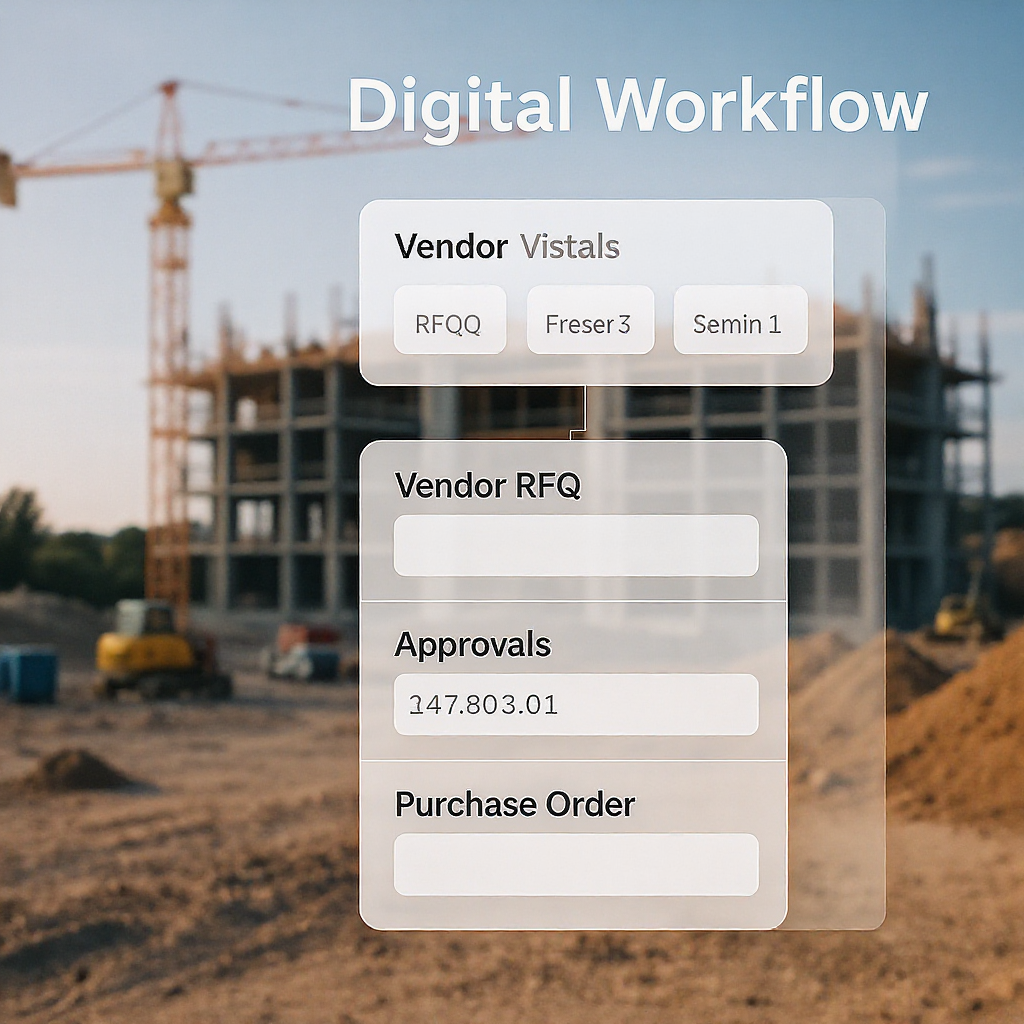
Here’s where vendor management software comes in. Tools like JobNext provide a structured workflow: Material Request (MR) → Request for Quotation (RFQ) → Vendor Offers → Purchase Order (PO). What does this mean in real terms?
Let’s say you need 20,000 sq. ft. of gypsum board. With manual processes, you might get quotes via email, negotiate over the phone, and track approvals in a spreadsheet. It’s chaotic, and approvals often slip through the cracks. But with a proper system, you can:
- Generate and send RFQs to multiple vendors automatically.
- Compare vendor offers side-by-side.
- Route approvals through pre-defined chains (no chasing signatures!).
- Issue POs directly from the system.
This isn’t just theory. A mid-size MEP contractor we worked with in the UAE reduced procurement lead times by 35% after implementing this workflow in JobNext. They also saved 8% annually on material costs by consistently capturing the best vendor offers.
The Bigger Picture: Real-Time Visibility
Vendor management isn’t just about transactions. It’s about having a bird’s-eye view of your supply chain. With platforms like JobNext, you can answer questions like:
- Which vendors are consistently delayed?
- Are material costs trending above estimates?
- Which subcontractors are nearing their contract limits?
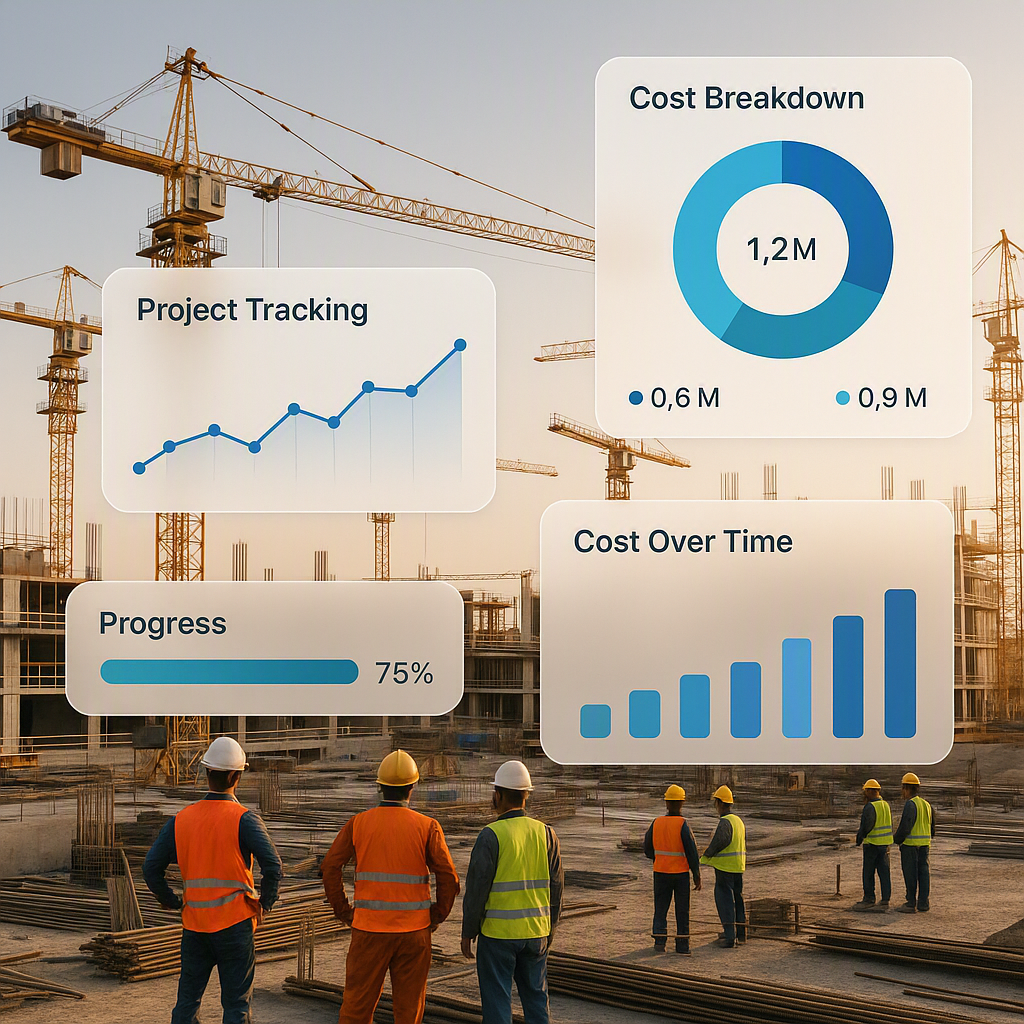
Consider this example: During a multi-site project, a general contractor in Saudi Arabia identified that 60% of delays were tied to just two vendors. With real-time dashboards, they reallocated orders to more reliable vendors mid-project, recovering two weeks of lost time.
This kind of insight isn’t possible with disconnected systems. As noted in The Hidden Cost of Tool Fragmentation on the JobNext blog, fragmented tools lead to data silos, making it hard to see the full picture. Unified platforms, on the other hand, tie procurement, billing, and progress tracking together, eliminating blind spots.
Common Objection: “We’re Too Small for This”
You might be thinking, “We’re a 100-person operation. Do we really need vendor management software?” Here’s the thing: Vendor issues don’t scale with your company size. A delayed shipment hurts a small contractor just as much as a large one.
In fact, smaller contractors often have less room for error because they can’t absorb overruns as easily. A missed RFQ or an overpaid invoice could mean the difference between profit and loss on a project.
Final Thoughts
Vendor management is no longer optional. It’s the backbone of profitable contracting. Whether it’s managing RFQs, tracking approvals, or monitoring vendor performance, the right tools can turn a chaotic process into a competitive advantage.
If you’re still relying on manual processes, ask yourself: How much time are you wasting chasing approvals? How many opportunities are you losing to negotiate better vendor rates? And most importantly, how much profit is slipping through the cracks?
As digital transformation sweeps through construction, it’s clear that the firms adopting smart software solutions — like JobNext — are the ones staying ahead. For more insights on how technology is reshaping the industry, check out Construction Digital Transformation: A No-Nonsense Roadmap for Mid-Size Contractors on the JobNext blog.
Ready to see JobNext in action?
Multi-tenant SaaS ERP for construction, facilities management, and contracting — covering preconstruction, project execution, procurement, HR & payroll, equipment, finance, and 150+ analytics reports.
Get Started Free →Learn more at JobNext.ai