The Hidden Costs of Manual Purchase Orders
If you're still managing purchase orders (POs) manually, you're probably bleeding money — and time. We've seen it too many times. A procurement team juggling spreadsheets, email threads, and phone calls. Vendors sending duplicate invoices. Missing approvals that delay material deliveries. Worse, no one knows the real-time status of who ordered what, from whom, and at what price.
This isn’t just a process problem. It’s a profitability problem. Deloitte’s 2022 global construction report found that inefficient procurement practices cost contractors up to 7% of their project budgets. For small to mid-size contractors already operating on razor-thin margins, that’s a killer.
Why Manual Systems Break Down
Let’s break it down.
-
Tracking Vendor Quotes: You send RFQs (Request for Quotations) to three vendors. One responds late, another sends an incomplete offer, and the third gives you a bulk discount that doesn't make it to your final PO. Result? Missed savings.
-
Approval Delays: Someone forgets to approve a PO. Material delivery gets delayed. The project site halts for two days. Multiply that by every project you’re managing, and you’ve got a recipe for chaos.
-
Duplicate or Missing POs: Without centralized tracking, it’s too easy to issue two POs for the same item. Or worse, forget to issue one at all. Either way, your budget takes a hit.
-
Lack of Real-Time Visibility: You don’t know what’s been spent until the invoices roll in. By then, it’s too late to control costs.
The Case for Automation
So, what’s the alternative? Automating your purchase order process. And no, we’re not talking about just generating PDFs faster. True PO automation means digitizing the entire workflow — from material requests to vendor selection, approvals, and tracking.
Here’s how that looks in practice:
1. Standardized Material Requests (MR)
Every site raises material requests in a structured format. No more free-text chaos or vague descriptions like “cement bags needed.”
2. RFQ → Vendor Offers → PO
Your system issues RFQs to pre-approved vendors, tracks their responses, and compares offers automatically. When you select a vendor, the system converts the chosen offer into a PO with one click.
3. Approval Chains Built In
No more chasing managers for sign-offs. Automated workflows route POs to the right approvers based on predefined thresholds (e.g., anything above ₹1,00,000 goes to the Operations Head).
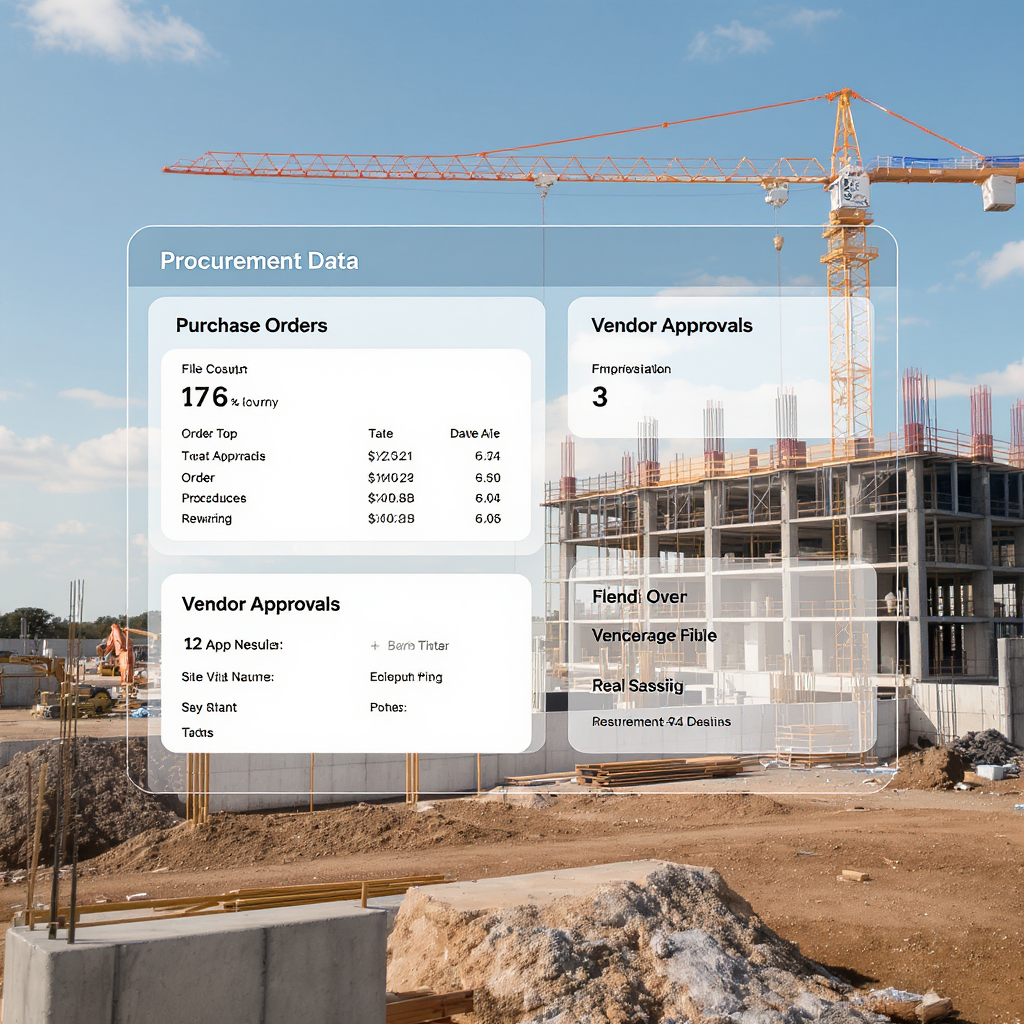
4. Real-Time Spend Tracking
You can see, at any given time, how much of your procurement budget has been committed and what’s still available. That’s priceless for controlling costs.
Real-World Examples
Here’s where JobNext comes in. One of JobNext’s standout features is its structured procurement workflow: MR → RFQ → Vendor Offers → PO. This isn’t just theory — it’s been implemented by contractors across India and the GCC who’ve replaced their manual systems.
Take a mid-size MEP contractor in Oman. Before JobNext, their procurement team spent hours reconciling material requests and vendor invoices. Double POs were common. After automating with JobNext, they reduced procurement cycle times by 30% and cut PO errors to virtually zero.
For more on digital transformation in construction, the JobNext blog lays out a practical roadmap for contractors.
What to Watch Out For
You might be thinking, “Automation sounds great, but it’s expensive.” Not necessarily. Cloud ERP platforms like JobNext offer subscription pricing that scales with your business. Plus, the ROI from reduced errors, faster cycles, and better vendor management often pays for itself in months.
Another concern? Adoption. No system works if your team doesn’t use it. That’s why phased implementation matters. Start with procurement, nail the process, and expand from there. This JobNext guide explains how to make ERP adoption stick.
The Bottom Line
Manual purchase orders are a luxury you can’t afford. Automation isn’t just a “nice-to-have” — it’s a necessity for staying competitive. With rising material costs and tighter project margins, every rupee saved on procurement goes straight to your bottom line.
Ready to stop the margin erosion? Automate your POs. Your future self will thank you.
Ready to see JobNext in action?
Multi-tenant SaaS ERP for construction, facilities management, and contracting — covering preconstruction, project execution, procurement, HR & payroll, equipment, finance, and 150+ analytics reports.
Get Started Free →Learn more at JobNext.ai