₹18 Lakh Lost: The Hidden Cost of Margin Erosion
Margins in construction are tighter than ever. Materials, labor, equipment rentals—it all adds up. The scary part? Many contractors don’t even realize they’re bleeding cash until it’s too late. On average, contractors lose 12-18% of their material budgets to inefficiencies, according to internal research from ConstructionSupply.ai. That’s ₹18 lakh gone on a ₹1 crore project.
Why? Because without real-time project profitability tracking, you’re flying blind. By the time finance reconciles costs at the end of the month, the damage is done. You’ve overpaid vendors, missed billing opportunities, or exceeded the budget for labor and materials. Fixing these issues after the fact is like repairing a roof after the rain—you’re just mopping up the mess.
The Problem: Delayed Cost Visibility
Think about it: how do you track your project costs right now? If you’re like most contractors, it’s probably a mix of spreadsheets, WhatsApp messages, and a whole lot of manual effort. By the time you’ve gathered all the data—purchase orders, labor hours, subcontractor bills—you’re already weeks behind.
This lag creates a perfect storm for margin erosion:
- Unapproved Spending: Site managers often order materials without checking the BOQ (Bill of Quantities) or project budget.
- Overruns Go Unnoticed: Cost overruns aren’t flagged until the project is nearly complete.
- Revenue Leakage: Incomplete or inaccurate billing leads to lost revenue.
- Missed Opportunities for Optimization: Without timely data, you miss chances to renegotiate contracts, reallocate resources, or adjust schedules.
Real-Life Example: The ₹25 Lakh Billing Gap
A medium-sized contractor in Mumbai recently discovered they had underbilled by over ₹25 lakh on a ₹2 crore project. How did this happen? Labor hours were logged inaccurately, and materials used on-site were never reconciled with the BOQ. By the time the issue was identified, the client had already closed the books, leaving the contractor to absorb the loss.
The Solution: Real-Time Project Profitability Tracking
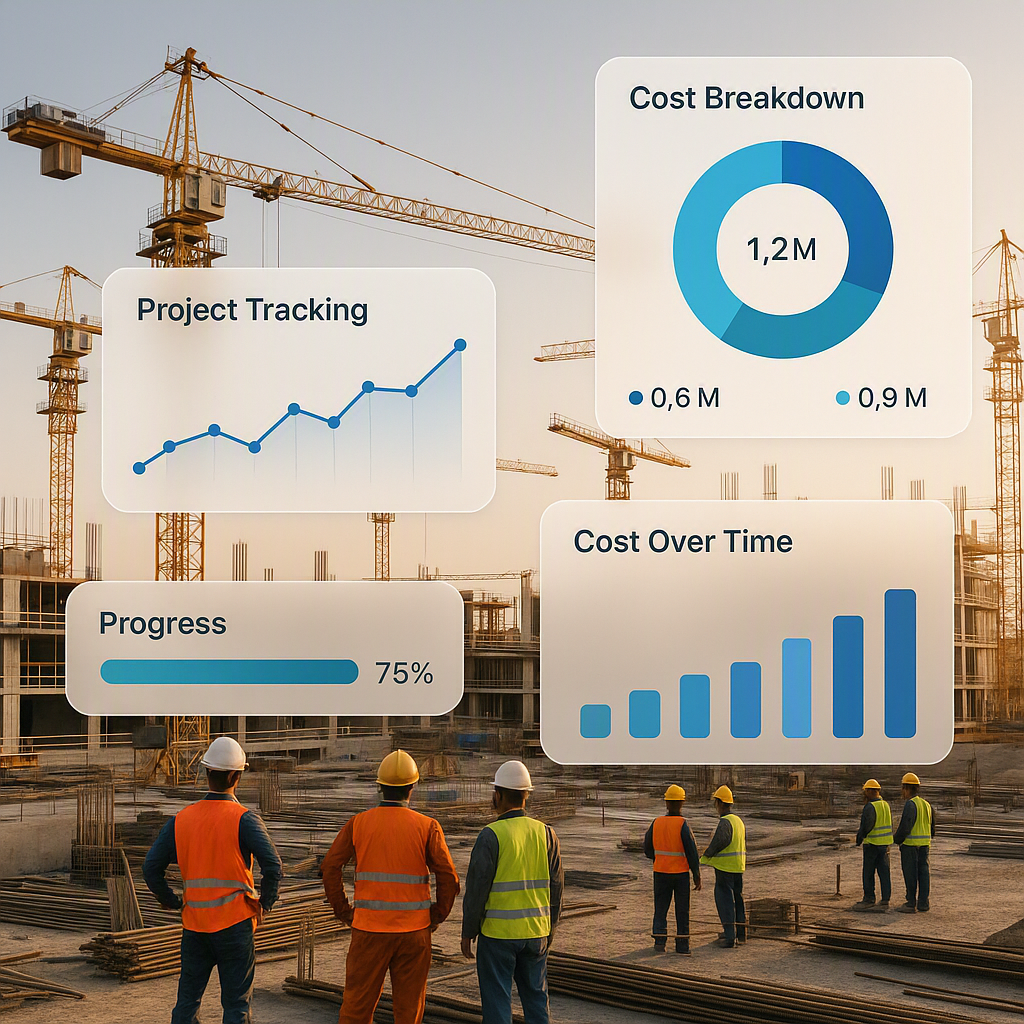
Here’s where real-time profitability tracking changes the game. Instead of waiting for end-of-month reports, you get live updates on how your project is performing. Tools like JobNext’s project analytics dashboard provide a clear view of:
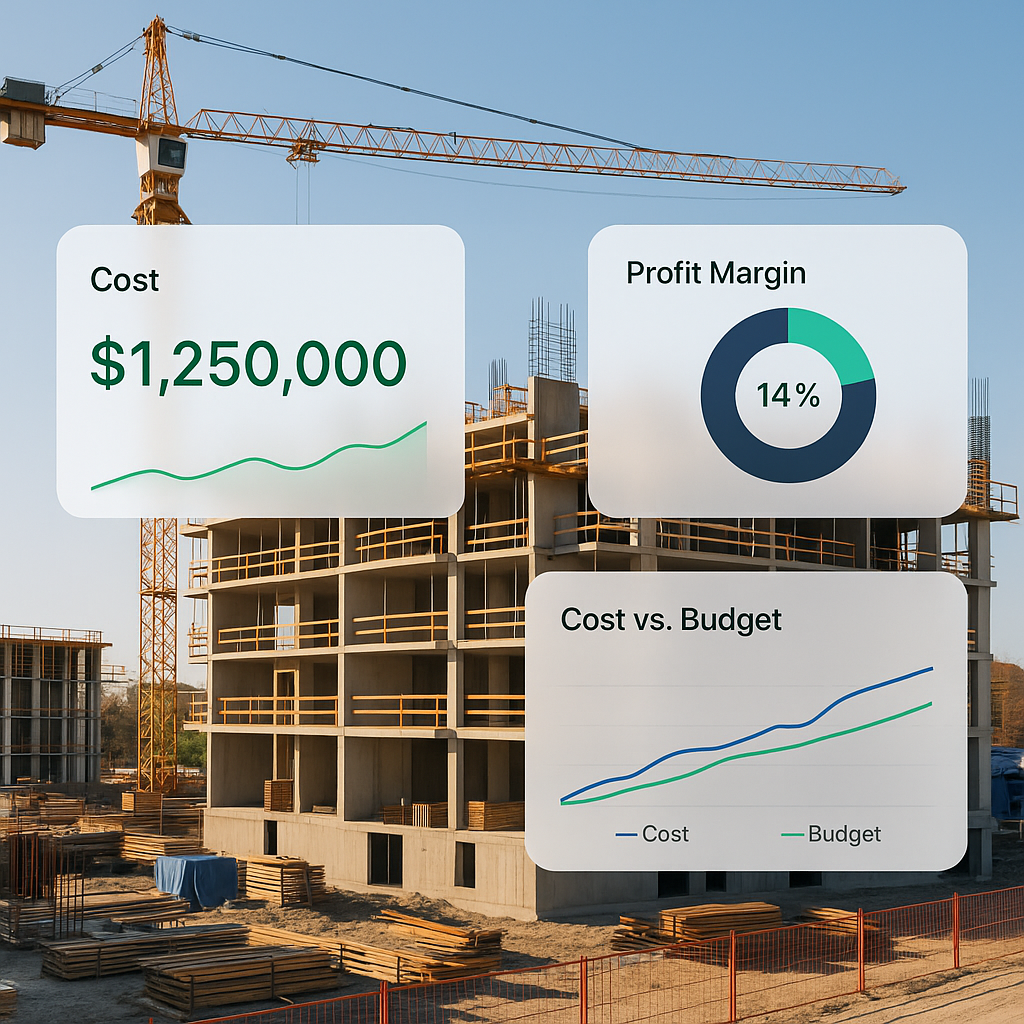
- Cost vs. Budget: Know instantly if you’re overspending on materials, labor, or equipment.
- BOQ Rate Variance: Compare quoted rates, billing rates, and actual costs to catch discrepancies early.
- Resource Reconciliation: See exactly where your money is going—whether it’s labor, subcontractors, or overhead.
How Real-Time Tracking Works:
- Automated Data Capture: Modern tools integrate with procurement systems, timesheets, and accounting software to pull data automatically.
- Custom Alerts: Get notified when spending crosses pre-set thresholds.
- Live Dashboards: Visualize project health in real-time, with key metrics like profit margins, cost variances, and resource utilization.
A Real-World Example
Let’s say you’re managing a ₹5 crore interior design project. You’ve allocated ₹1 crore for materials, but halfway through, you’ve already spent ₹70 lakh. Without real-time tracking, you might not notice this until the project is 80% complete, leaving you scrambling to cut costs or negotiate extensions.
With a system like JobNext, you’d get an alert as soon as you exceed 50% of your material budget. You could then:
- Audit Purchase Orders: Identify and cancel unnecessary or duplicate orders.
- Renegotiate Rates: Use the BOQ variance report to push vendors for better pricing.
- Reallocate Resources: Shift surplus materials from other sites to avoid new purchases.
Why Contractors Ignore This (And Why They Shouldn’t)
You might think, "I already have a good handle on my costs." But do you really? According to a 2023 McKinsey report, 80% of construction firms operate with fragmented systems, leading to poor data visibility. If you’re relying on spreadsheets or outdated ERPs, you’re likely missing key cost drivers.
Common Misconceptions:
- “It’s Too Expensive”: While implementing a real-time tracking system does come with upfront costs, the ROI is significant. Even catching one major overrun can cover the investment.
- “It’s Too Complicated”: Modern tools are designed with user-friendly interfaces and require minimal training. Most systems also offer customer support to help with onboarding.
- “We Don’t Need It”: Contractors often assume they have tight control over project costs, but research shows that inefficiencies are often hidden until they snowball into major issues.
Cost of Inaction:
- Average Margin Erosion: 12-18% of material budgets are lost to inefficiencies.
- Lost Opportunities: Contractors without real-time tracking report 30% fewer cost optimizations compared to those using modern systems.
- Reputational Damage: Consistent overruns and delays can hurt your ability to win future projects.
Case Study: How Real-Time Tracking Saved ₹50 Lakh
A Pune-based construction firm implemented JobNext for a ₹20 crore residential project. Midway through, the system flagged a 15% rise in labor costs compared to the original budget. Upon investigation, the firm discovered that subcontractors were inflating hours. By renegotiating contracts and implementing stricter timesheet controls, they saved ₹50 lakh. Without real-time tracking, this issue would’ve gone unnoticed until the project’s end.
Decision Framework: Is Real-Time Tracking Right for You?
| Question | If Yes | If No |
|---|---|---|
| Do you manage projects over ₹1 crore? | Real-time tracking is essential to protect margins. | You may still benefit, but ROI may be lower. |
| Are you using fragmented systems? | Consolidate data for better visibility and control. | Evaluate if your current system meets needs. |
| Have you experienced cost overruns? | Address root causes with proactive tracking. | Consider a simpler tool for monitoring. |
| Do you rely on manual processes? | Automate to save time and reduce errors. | Manual tracking might suffice for small projects. |
FAQs
1. How much does a real-time tracking system cost?
The cost depends on the size of your business and the features you need. Basic plans can start as low as ₹10,000 per month, while enterprise solutions may cost ₹1-2 lakh annually. However, the savings from preventing cost overruns usually outweigh the investment.
2. How long does it take to implement such a system?
Most modern tools, like JobNext, can be implemented in a matter of weeks. Many providers offer support to help you migrate data and train your team.
3. What if my team isn’t tech-savvy?
Today’s tools are designed with simplicity in mind. Intuitive interfaces and step-by-step guides make it easy for anyone to use. Some providers even offer on-site training.
4. Can it integrate with my existing systems?
Yes, most real-time tracking systems support integrations with popular accounting software, procurement platforms, and ERP tools. Before purchasing, check if your chosen tool supports your existing setup.
5. What’s the ROI of real-time tracking?
The ROI depends on your project size and current inefficiencies. Most contractors report a 10-15% improvement in profit margins after implementing real-time tracking.
The Bottom Line: Visibility Saves Money
In construction, every rupee counts. Real-time project profitability tracking isn’t just a fancy feature—it’s a necessity. It lets you:
- Catch cost overruns before they spiral out of control.
- Protect your margins by enforcing budget discipline.
- Make data-driven decisions that improve project outcomes.
If you’re tired of watching your margins erode, it’s time to rethink how you track project costs. As this article from JobNext points out, contractors who lack real-time profitability tracking are losing the fight. Don’t be one of them.
Ready to Stop Margin Erosion?
If you’re dealing with budget overruns and hidden costs, JobNext can help. Get started free →
Learn more at JobNext.ai