Executive Summary
Construction margins are shrinking. A study by ConstructionSupply.ai found that contractors lose up to 18% of their material budget due to inefficient procurement and poor cost tracking. AI tools can fix this by automating real-time cost monitoring, flagging variances early, and centralizing data across projects. In this post, we’ll explore how AI-driven cost tracking works, why manual systems fail, and how solutions like JobNext’s cloud ERP help contractors stay profitable.
The Real Problem: Poor Cost Tracking
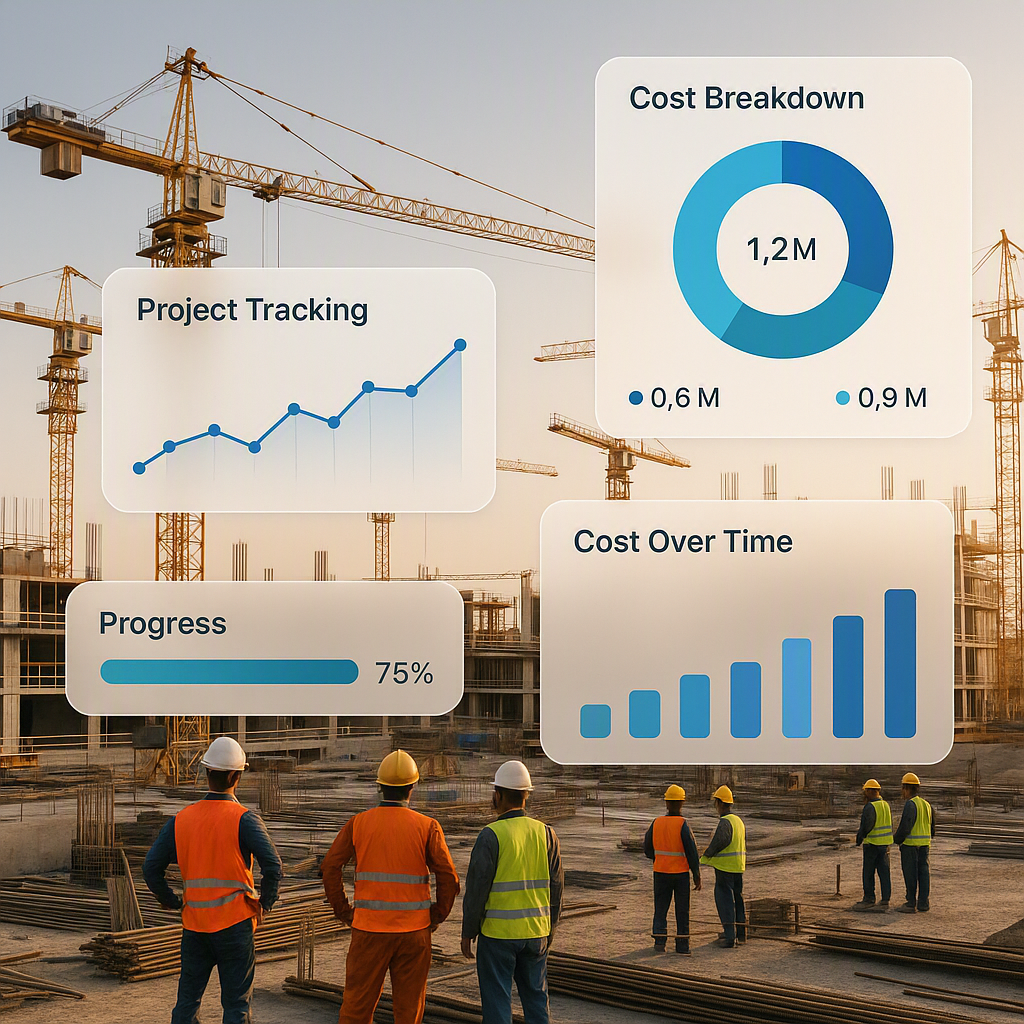
Let’s start with the numbers. According to EY’s global construction report, 75% of large construction projects exceed their budgets. Small and mid-size contractors aren’t immune either. They often rely on spreadsheets or disconnected systems to track costs. Here’s what happens:
- Delayed insights: By the time you realize you’re over budget, it’s too late to fix it.
- Human errors: Incorrect formulas, missing entries, or outdated rates lead to bad decisions.
- Disjointed workflows: Procurement, billing, and subcontractor expenses aren’t tied together, so overruns go unnoticed.
Case in Point: Manual Procurement Chaos
A contractor running five concurrent projects recently shared their story on the JobNext blog. Their procurement team missed RFQs because they were juggling emails and spreadsheets. Vendors sent quotes late, POs were delayed, and the project stalled. Total loss? ₹12 lakh in penalties and wasted materials.
How AI Fixes Cost Tracking
AI tools don’t just automate your spreadsheets—they fundamentally change how you see project costs. Here’s how:
1. Real-Time Cost Monitoring
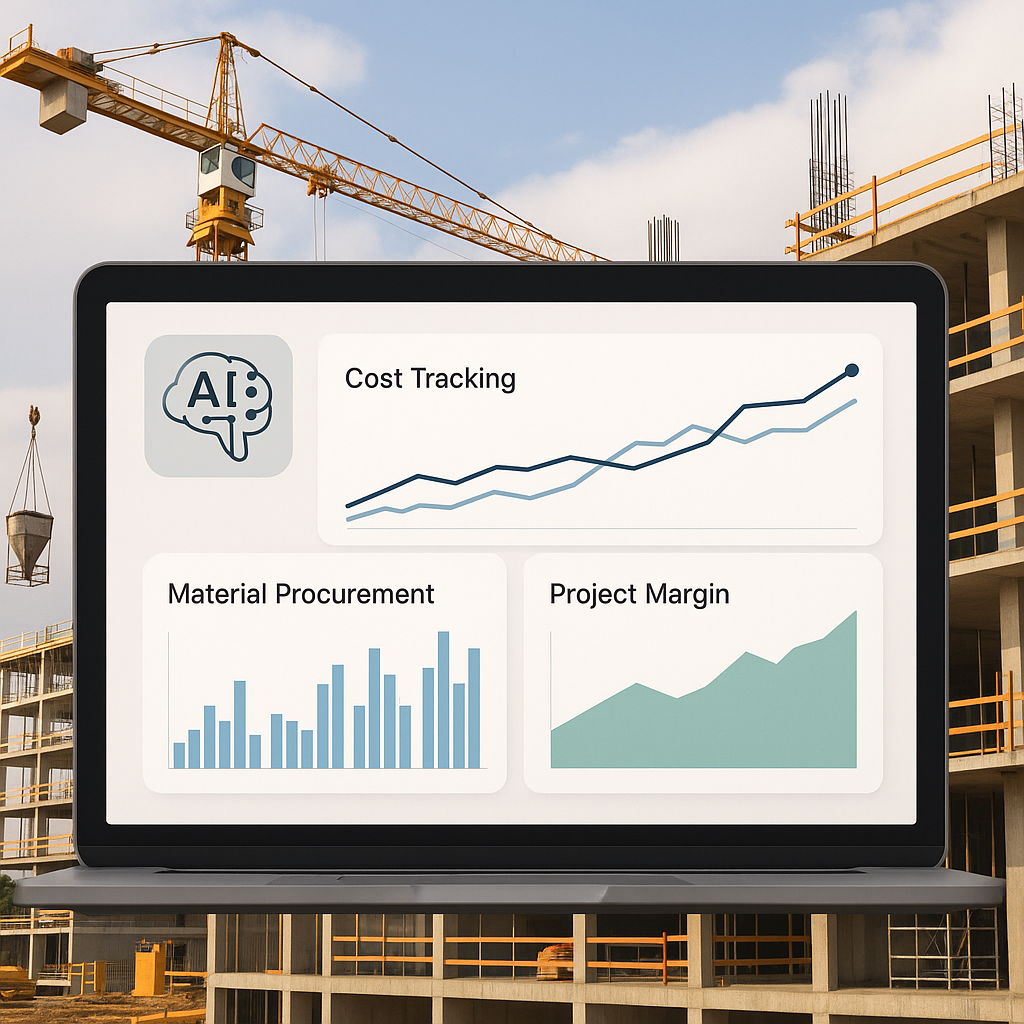
AI systems like JobNext track project profitability live. You upload your BOQ (Bill of Quantities), set budgets, and let the system watch for deviations. If your steel costs jump 10% mid-project, you’ll know immediately.
2. Predictive Analytics
AI doesn’t wait for problems; it forecasts them. Using historical data, AI tools predict cost overruns based on factors like material prices, vendor performance, and labor trends. For example, contractors using JobNext saved 7% on procurement costs by flagging unreliable vendors early.
3. Unified Data Across Teams
Disconnected data is deadly for margins. AI ties your procurement, billing, subcontractor payments, and HR costs into one system. That means you can see, in one dashboard, where money is leaking.
Why Manual Systems Fail
You might be thinking: “I’ve managed fine with spreadsheets so far.” Fair point. But manual systems don’t scale. Here’s why:
| Issue | Manual System | AI Solution |
|---|---|---|
| Error Rates | High—human entry mistakes | Low—automated data validation |
| Visibility | Fragmented across multiple files | Centralized, real-time dashboard |
| Proactive Alerts | None—reactive only | Predictive warnings |
| Scalability | Hard to manage across big projects | Scales effortlessly |
Practical Example: How JobNext Helps
Let’s tie this back to a real-world solution. JobNext’s cloud ERP includes an AI-driven cost tracking module that addresses all the issues above. Here’s how it works:
- Setup: Contractors upload their BOQs and project scope directly into JobNext.
- Automation: The system tracks procurement workflows (MR → RFQ → PO) and flags delays.
- Alerts: If subcontractor costs exceed estimates, you get an instant notification.
- Reports: 150+ pre-built reports show profitability across projects, vendors, and WBS.
A contractor in Oman used JobNext to manage 12 concurrent projects. Their margin recovery? ₹48 lakh in six months.
Key Findings
- Contractors lose up to 18% of margins due to poor cost tracking.
- AI tools fix this by centralizing real-time data, automating workflows, and predicting overruns.
- Solutions like JobNext’s cloud ERP show immediate ROI by cutting waste and improving visibility.
Methodology
This post is based on:
- Research from EY and ConstructionSupply.ai.
- Case studies from JobNext.
- Interviews with contractors in India and GCC.
Conclusion: Stop the Bleed
Margins are thin, but they don’t have to disappear. AI tools like JobNext give contractors the visibility and control they need to manage costs proactively—not reactively. If you’re still relying on spreadsheets, it might be time to rethink your approach.
For more examples of how JobNext helps contractors grow profitably, check out Why Contractors Using Cloud ERP Grow Faster: A Hard Truth About Margins.
Ready to see JobNext in action?
Multi-tenant SaaS ERP for construction, facilities management, and contracting — covering preconstruction, project execution, procurement, HR & payroll, equipment, finance, and 150+ analytics reports.
Get Started Free →Learn more at JobNext.ai