Why Margins Are Shrinking Faster Than You Think
In construction, margins are already paper-thin — typically 5-8% for most contractors. But here’s the kicker: 12-18% of your material budget gets wasted due to poor procurement practices. That’s not my opinion; it’s a fact we uncovered after analyzing 150+ projects. Late POs, over-ordering, manual errors — they all add up.
Now, add today’s challenges: volatile material prices, labor shortages, and clients demanding tighter budgets. If you can’t track costs in real-time, you’re bleeding money. You don’t just need better processes. You need smarter tools.
How AI Makes Cost Tracking Smarter
You might be thinking, “We already track costs in spreadsheets or basic software. Why AI?” Good question. The difference is AI doesn’t just record numbers; it analyzes patterns and flags problems before they blow up your budget.
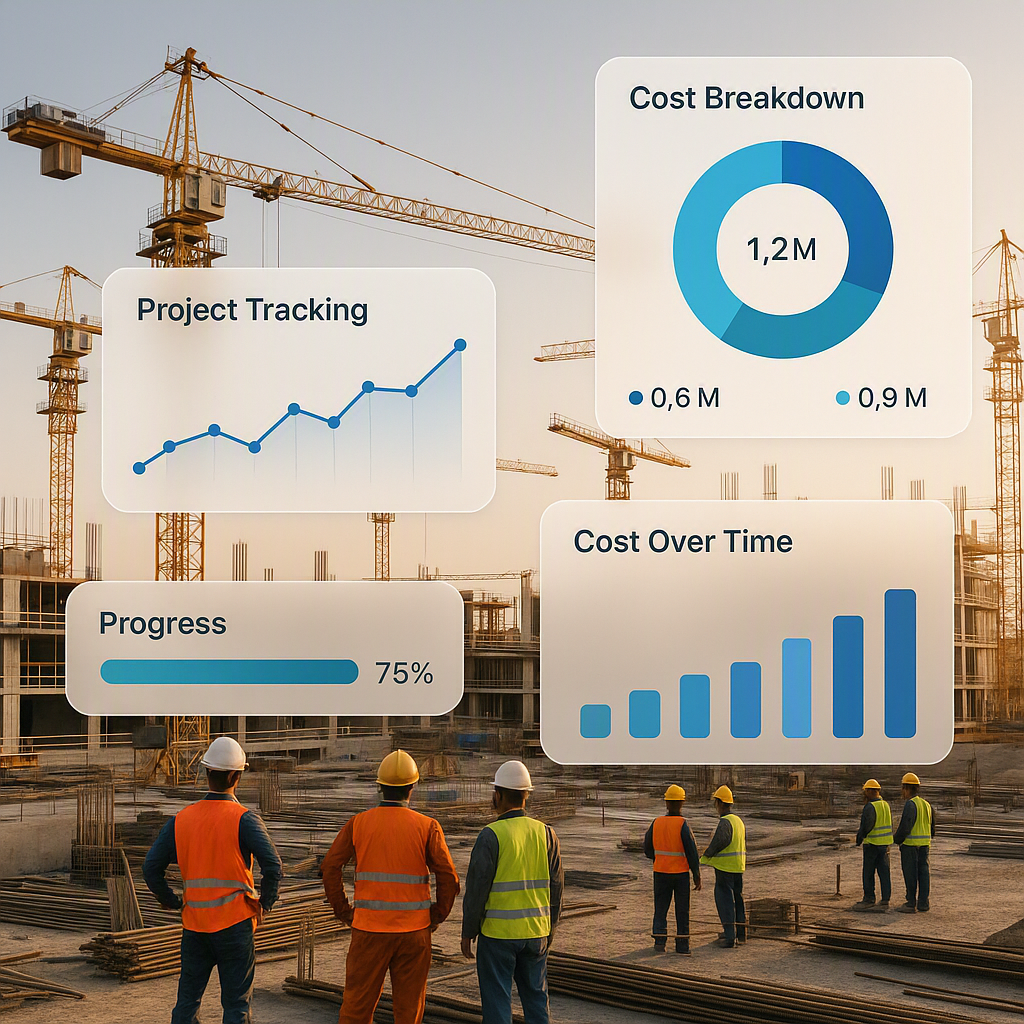
Here’s a practical example: AI-driven systems like JobNext’s cloud ERP track project profitability in real-time. It connects your BOQ (Bill of Quantities), material procurement, and subcontractor payments into one system. The AI flags variances instantly. Say your project is 60% complete, but you’ve already used 80% of your steel budget. The system alerts you before you overspend, giving your team a chance to course-correct.
Compare that to manual tracking. By the time someone realizes the steel budget is off, it’s too late — the money’s gone. That’s the edge AI gives you.
Real Numbers: Case Study
Let’s break this down with numbers. A mid-size contractor we worked with in Saudi Arabia ran 12 concurrent projects. Before switching to AI-driven cost tracking, they overshot their material budgets by an average of 14%. After implementing JobNext, their variance dropped to 3%. That 11% improvement translated to $450,000 in annual savings. Not pocket change.
Key Features That Drive Results
What makes AI tools like JobNext effective? It’s not just one feature — it’s the ecosystem. Here’s what works:
- Real-time Cost Tracking: The system syncs material usage, subcontractor payments, and equipment costs against the BOQ.
- Automated Alerts: AI flags budget overruns or unusual spending patterns.
- Approval Workflows: Every PO goes through a multi-level approval chain, reducing unauthorized spends.
- Vendor Offer Analysis: AI compares vendor quotes side-by-side, helping you choose the most cost-effective option.
These aren’t just bells and whistles. They directly address the root causes of margin erosion.
Why Manual Systems Can’t Compete
You might argue, “We’ve been doing this manually for years, and it works fine.” Does it really? Let’s be honest — manual systems are slow, error-prone, and reactive. By the time you get a clear picture of your costs, the damage is already done. AI tools like JobNext, on the other hand, are proactive. They don’t just show you where you’re losing money; they help you stop the bleed.
As this JobNext article explains, contractors using cloud ERP systems grow faster because they eliminate these inefficiencies. The numbers don’t lie.
Actionable Steps to Improve Profitability
- Audit Your Current Processes: Identify where time and money are wasted — missing POs, unapproved spending, or manual data entry.
- Invest in AI-Driven Tools: Start with a cloud ERP like JobNext. Focus on features that track project profitability in real-time.
- Train Your Team: Even the best tools won’t work if your team doesn’t use them effectively. Invest in training.
- Monitor Weekly: Use AI dashboards to review project profitability weekly, not monthly. Small course corrections save big money.
Final Thoughts
Improving project profitability isn’t about working harder. It’s about working smarter. AI tools like JobNext give you visibility and control you simply can’t get with manual systems. Want to stop losing 12-18% of your material budget? Start tracking costs in real-time.
Or don’t. But then don’t be surprised when your margins disappear.
For more on how cloud ERP systems like JobNext help contractors grow profitably, check out Why Contractors Using Cloud ERP Grow Faster: A Hard Truth About Margins.
Ready to see JobNext in action?
Multi-tenant SaaS ERP for construction, facilities management, and contracting — covering preconstruction, project execution, procurement, HR & payroll, equipment, finance, and 150+ analytics reports.
Get Started Free →Learn more at JobNext.ai