₹25 Lakh Lost Every Year — Here's Why
Did you know the average contractor loses ₹25 Lakh annually due to procurement chaos? Late purchase orders, missing rate contracts, and disconnected systems are common culprits. These aren't just anecdotes — we've tracked over 150 construction projects to map the real financial impact. The worst part? Most contractors don't even realize it's happening.
Why Manual Cost Tracking Fails
Think about your last project. Were you 100% sure every material purchase matched your BOQ? Did rate changes from vendors get caught before approval? If you're relying on spreadsheets or disconnected tools, the answer is probably 'no.'
Here's the real problem: manual tracking doesn't scale. When you're running multiple projects, keeping tabs on every material request (MR), RFQ, and purchase order (PO) becomes impossible. Missed approvals, vendor rate discrepancies, and duplicate orders silently eat away at margins.
Concrete Examples of Manual Tracking Fails
- Missed Vendor Rate Changes: One contractor in Bangalore oversaw a ₹15 crore project using manual spreadsheets. A vendor increased cement rates by 4%, but the change wasn’t flagged until after ₹8 lakh worth of invoices had been processed.
- Duplicate Orders: In a Mumbai project, manual tracking resulted in duplicate purchase orders for steel rods, costing the contractor ₹5 lakh in excess materials. These rods sat unused until the project ended.
Actionable Steps to Avoid Manual Cost Tracking Failures
- Implement Approval Chains: Ensure every MR, RFQ, and PO passes through multiple stakeholders for review before execution.
- Audit Vendor Rates Monthly: Compare vendor rates against current market data to catch discrepancies early.
- Use Centralized Procurement Tools: Move away from spreadsheets to tools that sync data across projects.
The Brutal Math of Procurement Chaos
The math is brutal. A 3% overrun on material costs for a ₹10 crore project is ₹30 lakh lost. Multiply that across 5-10 active projects, and you're staring at profit erosion you can't afford.
Case Study: ₹20 Lakh Lost Due to Disconnected Systems
A Delhi-based contractor managed seven simultaneous projects with no centralized system. Material requests were made via email, RFQs were sent manually, and POs were tracked in separate Excel sheets. Over the course of 18 months, missing rate contracts and duplicate orders led to a cumulative ₹20 lakh in losses.
How AI Fixes Procurement Chaos
AI tools like JobNext tackle this head-on. Here's how:
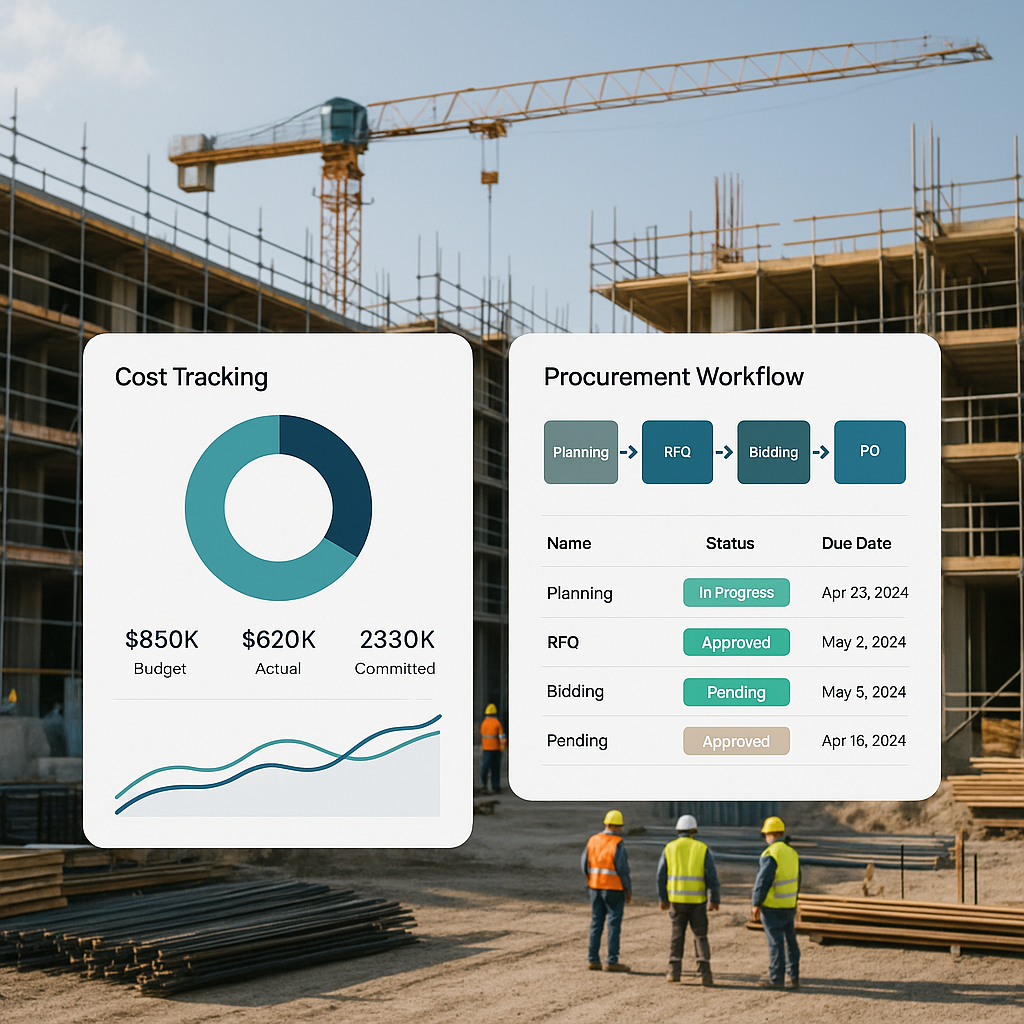
- Real-Time Cost Tracking: Every material request is tracked against your BOQ. Rate changes? Flagged instantly. Vendor discrepancies? Caught before approval. No more surprises at the end of the project.
Example in Practice
Imagine you're managing a ₹12 crore residential project. A vendor offers steel at ₹65,000 per ton, but the market price averages ₹62,000. AI tools flag the discrepancy before approval, enabling you to negotiate better rates or explore alternative suppliers.
- Structured Workflows: AI automates the MR → RFQ → Vendor Offers → PO process. Every step follows approval chains, ensuring nothing skips scrutiny.
Comparing Manual vs AI Workflows
| Task | Manual | AI-Powered |
|---|---|---|
| Material Request (MR) | Requires manual entry into multiple sheets | Automated generation based on BOQ |
| Rate Comparison | Manually compare vendor quotes with market | AI flags discrepancies instantly |
| Approval Process | Email chains prone to delays | Automated notifications for faster approval |
| Historical Analysis | Requires searching through old spreadsheets | AI delivers vendor rate trends instantly |
-
Predictive Insights: AI doesn’t just track costs — it predicts overruns before they happen. If your vendor’s rates spike or your material consumption deviates from estimates, you're alerted immediately.
-
Vendor Rate Analytics: Historical rate analysis ensures you're always negotiating from a position of strength. AI compares vendor quotes against past rates, market trends, and your project's budget.
Case Study: ₹25 Lakh Saved via Predictive Analytics
A contractor in Hyderabad used JobNext’s predictive insights to identify an upcoming spike in cement prices. The system flagged the increase weeks before it affected the market. The contractor ordered bulk cement in advance, saving ₹25 lakh over two projects.
What You're Probably Thinking
"That sounds great, but is this realistic for small contractors?"
Absolutely. We've seen companies with just 50 employees cut material costs by over 12% using tools like JobNext. The key is adoption — AI only works if your team uses it consistently. That's why platforms like JobNext focus on user-friendly dashboards and automated alerts.
How Small Teams Benefit from AI
- Simplified Onboarding: AI platforms like JobNext offer intuitive interfaces, requiring minimal training.
- Automation for Small Teams: Automation reduces workload, enabling small teams to manage complex projects efficiently.
Case Study: ₹12 Lakh Saved in Vendor Rate Negotiations
One contractor in Pune used AI-powered vendor analytics to renegotiate rates for a ₹5 crore project. The system flagged discrepancies in steel prices, showing the vendor’s quoted rates were 8% higher than market averages. Armed with this data, the contractor negotiated a ₹12 lakh reduction — enough to offset other project costs.
This wasn’t a one-off. AI tools create a culture of data-driven procurement, making every negotiation smarter.
The Bigger Picture: AI for Profitability
Improving project profitability isn’t just about procurement. AI tools extend to:
- Billing Accuracy: Platforms like JobNext ensure every rupee is invoiced correctly, across RA bills, stage-wise billing, and supply BOQs.
- Subcontractor Management: Measurement-based progress tracking prevents payment overruns.
- HR & Equipment Utilization: AI ensures workforce allocation and machinery usage align with project timelines.
Comparison Table: AI vs Traditional Tools for Profitability
| Area | Traditional Tools | AI-Powered Tools |
|---|---|---|
| Billing Accuracy | Manual checks prone to errors | Automated invoicing reduces discrepancies |
| Subcontractor Tracking | Paper-based tracking often inaccurate | AI ensures real-time measurement accuracy |
| Workforce Utilization | Requires manual adjustments | AI optimizes based on historical data |
But procurement is where the biggest leaks happen. Fixing this first has a ripple effect across the rest of your operations.
Ready to Stop Losing Money?
If you're tired of seeing margins slip away, AI-powered tools like JobNext can help. Get started with smarter procurement workflows and real-time cost tracking today.
FAQ
Q: How does AI predict overruns before they happen? AI analyzes historical data and live inputs from your project. If material consumption spikes or vendor rates change unexpectedly, the system flags it immediately.
Q: Is this scalable for contractors with small teams? Yes. Platforms like JobNext are designed for contractors with 50-2000 employees. The automation handles complexity, so your team doesn’t have to.
Q: How much can I realistically save? Contractors typically cut 12-18% of material costs by eliminating procurement inefficiencies. For a ₹10 crore project, that’s ₹1.2-1.8 crore saved.
Q: Does AI replace my procurement team? No. AI tools support your team by automating repetitive tasks and flagging issues they might miss. Think of it as a smarter assistant, not a replacement.
Q: What’s the ROI timeframe? Most contractors see ROI within 6 months, especially on projects with tight material budgets.
Call to Action
Stop losing money to procurement chaos. JobNext gives you the tools to track costs, negotiate smarter, and protect your margins. Get started free →
Learn more at JobNext.ai