Why Vendor Performance Matters
Margins are tight in construction. Every delayed delivery and missed quality standard eats into profitability. Yet most contractors don’t track vendor performance beyond basic RFQ (Request for Quotation) comparisons. That’s a problem. If your suppliers consistently underdeliver, your projects suffer — and so does your reputation.
A vendor performance scorecard helps fix this. It’s not just a fancy spreadsheet; it’s a structured way to measure and compare how your suppliers perform. Think of it as your procurement team’s report card for vendors. This tool empowers you to make data-driven decisions, ensuring that your procurement process contributes to project success rather than becoming a liability.
Why Track Vendor Performance?
Vendor performance isn’t just about avoiding delays — it’s about safeguarding every aspect of your project. Poor vendor performance can lead to:
- Increased project costs: Late deliveries might force you to pay for expedited shipping or emergency purchases from alternative suppliers.
- Missed deadlines: If a vendor’s delays cause a project to overrun, you might face penalties or strained client relationships.
- Reputation damage: Consistently selecting unreliable vendors can impact how clients perceive your company’s competence.
- Compliance risks: Vendors who fail to meet statutory requirements can expose you to fines or legal disputes.
By tracking vendor performance, you minimize these risks and build stronger, more reliable supply chains.
What Metrics Should You Measure?
To build a useful scorecard, focus on metrics that directly impact your projects. A good scorecard typically includes four key categories: delivery reliability, cost metrics, quality and compliance, and payment terms. Let’s break these down in detail.
1. Delivery Reliability
Delivery reliability ensures that your projects stay on schedule. Delays in receiving materials or services can have a cascading effect, pushing back entire timelines. Key metrics include:
- On-Time Deliveries: Track how often the vendor meets promised delivery dates. This metric directly impacts your ability to stick to project schedules.
- Promised vs. Actual Delivery: Measure the gap between the vendor’s estimated delivery timelines and what they actually achieve. Tools like JobNext offer a delivery heatmap to flag delays month-by-month, helping you identify vendors who consistently overpromise and underdeliver.
How to Track:
- Use digital procurement tools or ERP systems to log promised and actual delivery dates automatically.
- For manual tracking, maintain a simple spreadsheet with columns for promised delivery date, actual delivery date, and delay duration.
2. Cost Metrics
Cost overruns can ruin project profitability, even if other aspects of vendor performance are satisfactory. Important metrics include:
- Total Landed Cost: This includes not just the item’s price but also freight, taxes, and other incidental costs. A vendor with a lower unit price might end up being more expensive after factoring in logistics.
- Budget Variance: Compare actual procurement costs against budgeted rates. If a vendor’s rates consistently exceed estimates, it’s a red flag.
How to Track:
- Use procurement software that calculates total landed costs automatically.
- Regularly compare actual vendor invoices with your initial budget to identify discrepancies.
3. Quality and Compliance
Quality issues can lead to rework, project delays, or even safety risks. Compliance failures may expose your business to legal and financial penalties. Key metrics include:
- Technical Approvals: Has the vendor’s material or service quality been verified for the project?
- Past Performance: Review historical data — previous project quality, disputes, or rejections.
- Statutory Compliance: Ensure vendors meet labor, tax, and safety standards. JobNext, for example, tracks compliance like GST/TDS filings and safety certifications directly in its vendor directory.
How to Track:
- Conduct regular audits of vendor-supplied materials and services.
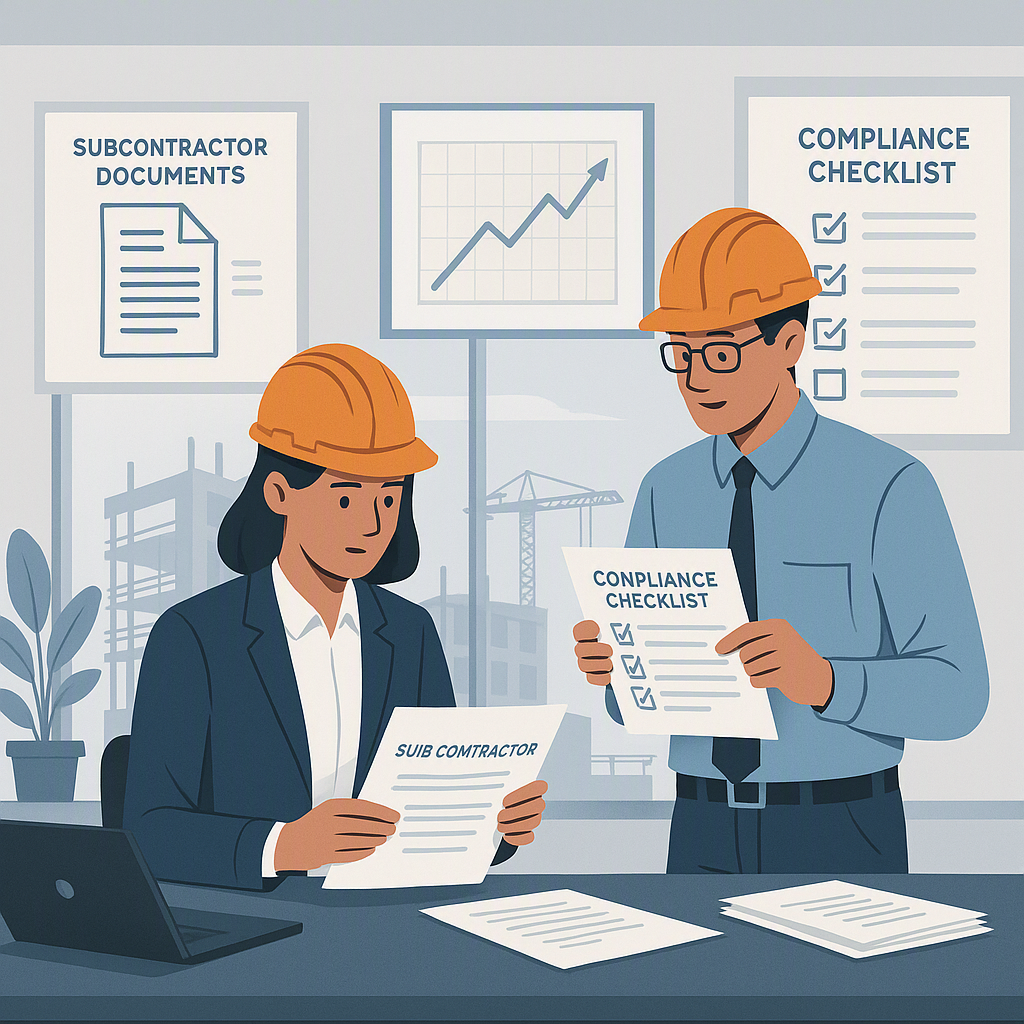
- Use a compliance checklist to verify that vendors meet required standards.
4. Payment Terms
Favorable payment terms can improve your cash flow and reduce financial stress. Key metrics include:
- Credit Periods: Vendors offering longer credit terms help reduce working capital pressure.
- Retention Recovery: Are retention clauses honored without dispute? Consistent issues here could indicate poor vendor financial health.
How to Track:
- Monitor payment terms and retention recovery timelines using your accounting system.
- Regularly review vendor contracts to ensure terms are being upheld.
Step-by-Step: Building the Scorecard
Step 1: Define Metrics
Start by selecting metrics that align with your project goals. For example:
- For subcontractors: Focus on technical capability, timeline feasibility, and compliance.
- For material suppliers: Prioritize delivery reliability and cost metrics.
Limit your scorecard to 4-6 key metrics initially to keep it manageable.
Step 2: Assign Weights
Not all metrics carry the same importance. For urgent projects, delivery reliability might outweigh cost considerations. Assign weights to each metric based on their relevance to your goals. For example:
| Metric | Weight (%) |
|---|---|
| Delivery Reliability | 40% |
| Cost Metrics | 30% |
| Quality & Compliance | 20% |
| Payment Terms | 10% |
Step 3: Collect Data
Historical data is critical for accurate vendor evaluations. Use procurement tools like JobNext to automate data collection. If automation isn’t an option, maintain manual records of RFQs, POs (Purchase Orders), and MRNs (Material Receipt Notes).
Step 4: Rank Vendors
Once the data is collected, evaluate vendors side-by-side. Use a comparative statement report to see how vendors score across your weighted criteria. This makes it easier to identify top performers and underperformers.
Step 5: Review Regularly
Vendor performance isn’t static. Update your scorecard quarterly or after major project milestones. Regular reviews help you adapt to changes in vendor performance.
Common Mistakes to Avoid
Mistake 1: Overweighting Price
Cheapest isn’t always best. A low-cost vendor who delivers late or cuts corners will cost you more in the long run.
Mistake 2: Ignoring Compliance
Non-compliant vendors are a liability. Missed GST filings or expired safety certifications can lead to legal headaches.
Mistake 3: Skipping Documentation
Always document why a vendor was selected (or rejected). Systems like JobNext’s Comparative Statement ensure audit trails are complete, even when the lowest bidder isn’t chosen.
FAQ
1. How do I handle vendors with no historical data?
Start them as probationary vendors. For the first few orders, track performance manually. Clearly outline expectations through detailed RFPs and RFQs to minimize ambiguity.
2. What’s the best way to collect vendor performance data?
Automate the process wherever possible. Tools like JobNext pull data directly from procurement workflows, saving time and reducing errors.
3. Can I use the scorecard for subcontractors as well as suppliers?
Yes, the same principles apply. For subcontractors, metrics like work quality, adherence to schedules, and compliance are particularly important.
4. How often should I update the scorecard?
Update it quarterly or after major project milestones. This ensures your evaluations reflect current vendor performance.
5. What if a vendor disputes their evaluation?
Be transparent. Share the methodology and data behind your assessment. This reduces the chances of disputes and builds trust.
Comparison Table: Manual vs. Automated Vendor Performance Tracking
| Feature | Manual Tracking | Automated Tracking |
|---|---|---|
| Data Entry | Time-consuming, error-prone | Automated from workflows |
| Real-Time Updates | Not available | Instant |
| Comparative Analysis | Requires manual effort | Automatic and visual |
| Audit Trails | Limited | Comprehensive |
| Scalability | Difficult to scale | Easily scalable |
How JobNext Can Help
If managing vendor performance feels overwhelming, JobNext simplifies it. With features like comparative statements, delivery heatmaps, and compliance tracking, you get all the data you need to build a reliable scorecard — without the manual hassle. JobNext integrates seamlessly into your procurement workflows, ensuring that vendor evaluations are both accurate and actionable.
Learn more at JobNext.ai