Why Subcontractor Management Matters
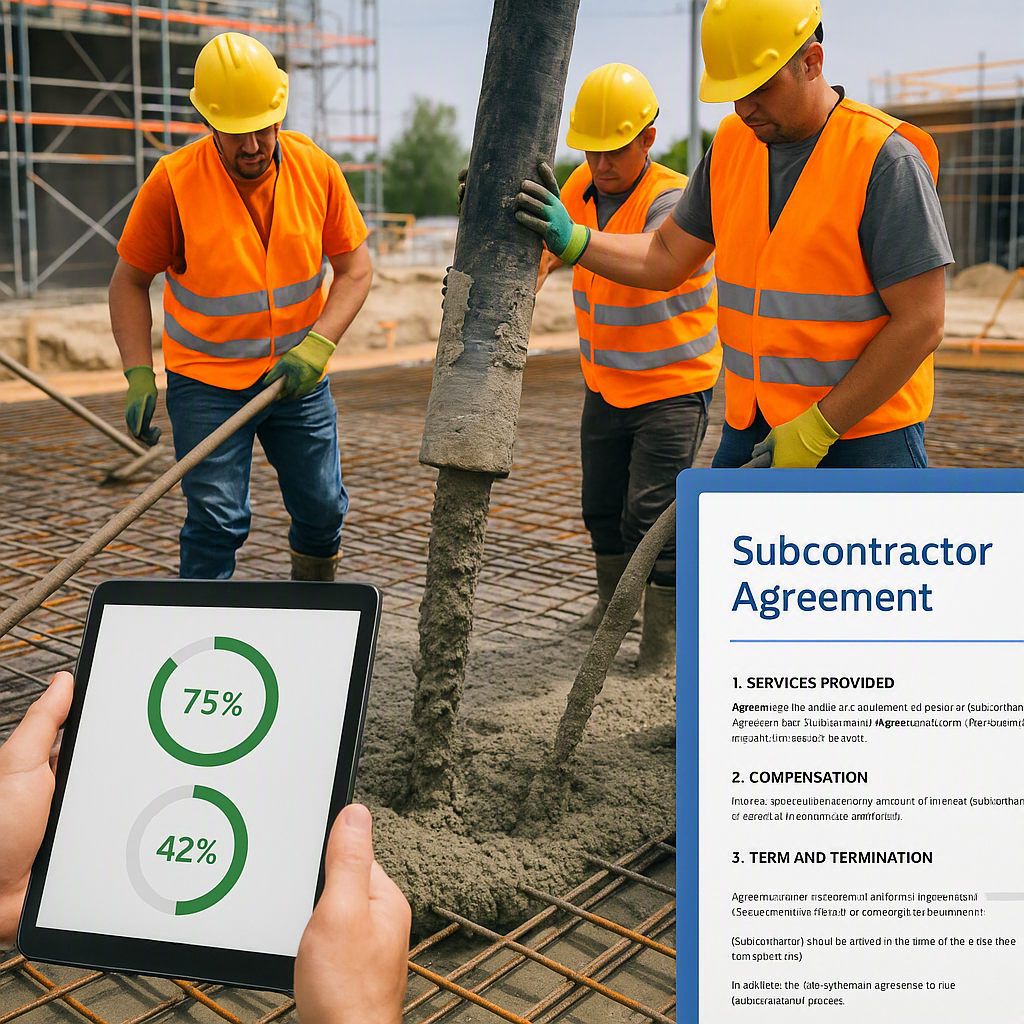
Let’s start with the obvious: subcontractors make or break construction projects. But managing them? That’s where contractors often stumble. Missed approvals, vague scopes, or late payment disputes can add months to timelines and shave margins down to nothing.
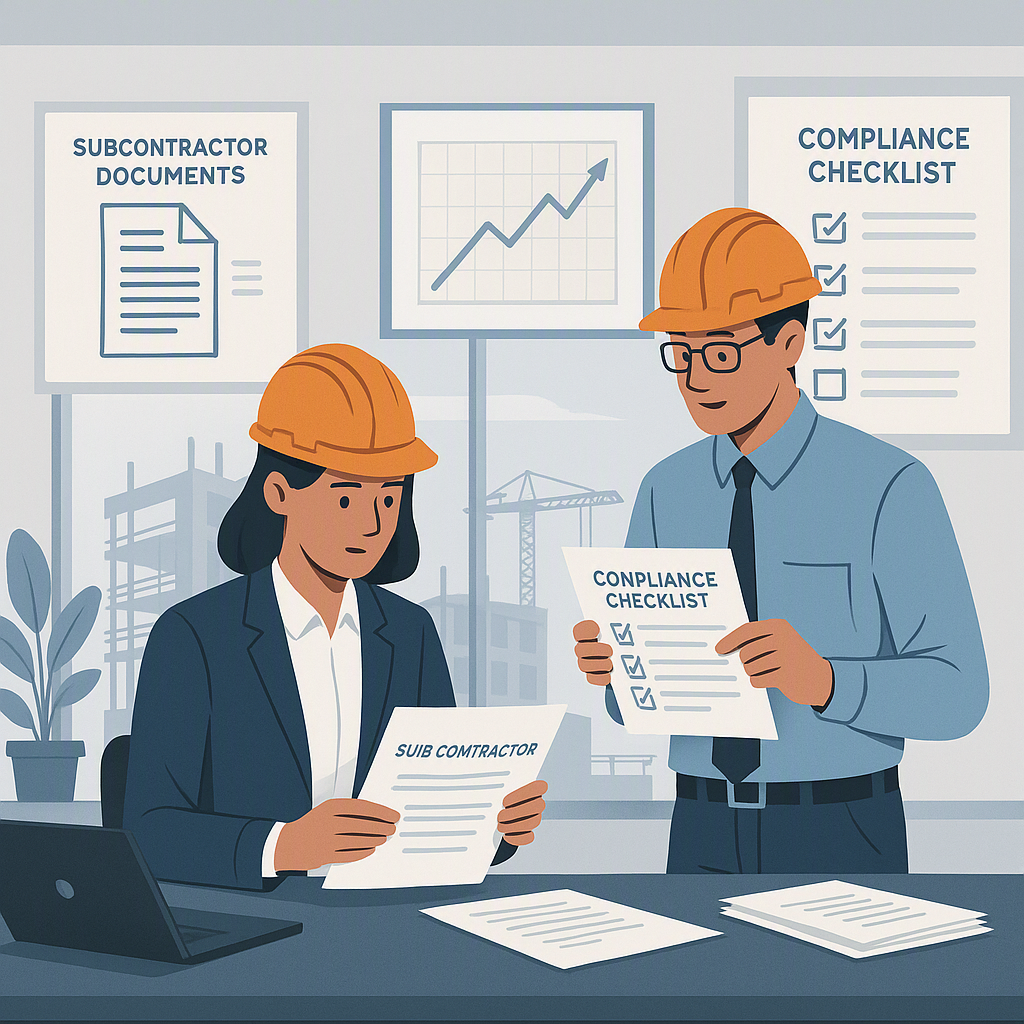
In our experience, contractors don’t fail because the work is complex—they fail because the workflow is chaos. A proper subcontractor management plan fixes that. It’s not just a document—it’s a system. Here’s how to build one.
Key Components of a Subcontractor Management Plan
1. Define Work Items and Groups
Before you even talk to subcontractors, break your project scope into clear, actionable tasks. This is the foundation of any successful subcontractor management plan. Without this clarity upfront, projects often spiral into confusion, scope creep, and disputes.
Start by categorizing your work into logical work groups—broad categories of tasks like plumbing, electrical, or HVAC. Then, break each group into smaller, actionable work order items that define specific deliverables. This granular breakdown ensures you leave no stone unturned.
For instance:
| Work Group | Work Order Item |
|---|---|
| Electrical | Install main distribution board |
| Electrical | Wiring for lighting and power outlets |
| Plumbing | Lay underground piping |
| Plumbing | Install water heater and fixtures |
Actionable Steps:
- Review Project Drawings and Specifications: Go through all architectural and engineering plans with your team to ensure every task is accounted for.
- Categorize Tasks: Group tasks by discipline (e.g., structural, electrical, etc.).
- Standardize Work Order Templates: Use a consistent format for defining work groups and related tasks, ensuring clarity for everyone involved.
This structure not only simplifies budgeting and progress tracking but also helps you avoid scope omissions that could delay the project.
2. Budget and Approvals
Every subcontracted task needs a pre-approved budget. Without this, you’re essentially gambling with your project’s profitability. Budgets provide a financial framework that ensures you don’t overcommit resources or overspend.
Best Practices for Budgeting:
- Define Scope Before Budgeting: Always finalize your work order items before assigning budgets to them. A clear scope eliminates guesswork.
- Get Stakeholder Approvals: Share budgets with relevant stakeholders (e.g., project managers, finance teams) and secure their sign-off before proceeding.
- Track Budget Burn Rates: Use tools like budget burn reports to monitor spending in real-time and avoid mid-project surprises.
Actionable Steps:
- Establish a Budget Approval Workflow: Define who approves what and create a checklist for budget sign-offs.
- Use Software for Budget Tracking: Tools like JobNext's subcontractor module automate budget approvals and tracking.
- Reassess Budgets Regularly: Periodically review budgets against actual costs to identify variances early.
Proper budgeting isn’t just about controlling costs—it’s about setting realistic expectations for everyone involved.
3. Work Requisition (WR)
A Work Requisition (WR) is your formal request for subcontracted work. Think of it as the bridge between your site team and procurement department. Without a clear WR, your procurement process becomes disorganized and prone to errors.
What Should a WR Include?
- Detailed Scope: Attach drawings, BOQs (Bill of Quantities), and specifications to ensure clarity.
- Quantities Needed: Specify exact quantities to avoid overordering or underordering.
- Budget Reference: Link the WR to the pre-approved budget for accountability.
Actionable Steps:
- Standardize WR Templates: Create a template that includes all necessary fields, such as scope, quantities, and budget references.
- Train Your Team: Ensure project managers and site engineers understand how to prepare and submit a WR.
- Centralize WR Records: Use a digital tool to store and track all WRs for easy reference.
Remember, a well-prepared WR ensures that subcontractors know exactly what’s expected of them, reducing disputes and delays.
4. Request for Proposal (RFP)
Once you have a WR, it’s time to invite subcontractors to bid. The RFP process is where you set the stage for competitive pricing and quality work. However, poorly prepared RFPs often lead to higher costs and mismatched expectations.
Tips for Better RFPs:
- Attach Comprehensive Documentation: Provide detailed scopes, drawings, timelines, and quality standards.
- Set Clear Evaluation Criteria: Decide in advance how you’ll evaluate bids (e.g., price, experience, timeline).
- Invite Multiple Bids: Always aim for at least three bids to ensure competitive pricing.
- Use Comparison Tools: Platforms like JobNext can auto-generate side-by-side comparisons of vendor bids, highlighting differences in cost and scope.
Actionable Steps:
- Define RFP Goals: Are you prioritizing cost, speed, or quality? Be clear about your objectives.
- Standardize Bid Templates: Use a consistent format to make vendor comparisons easier.
- Communicate Deadlines: Clearly state submission deadlines in your RFP to avoid delays.
A well-executed RFP process not only ensures better pricing but also helps you find the right subcontractor for the job.
5. Work Order (WO)
The Work Order (WO) is the binding agreement between you and the subcontractor. It’s where all the critical details come together—scope, deliverables, timelines, and payment terms.
What Should a WO Include?
- Approved Scope and Quantities: These should align with the WR and RFP.
- Payment Terms: Include details on advances, retention amounts, and penalties.
- Start and Completion Dates: Specify clear timelines to avoid ambiguity.
- Liquidated Damages Clauses: Protect your project from delays by including penalties for missed deadlines.
Actionable Steps:
- Use a Legal Template: Consult legal experts to create a standardized WO template.
- Review WOs Thoroughly: Double-check all details before issuing the WO.
- Communicate Terms Clearly: Ensure subcontractors understand and agree to all terms before starting work.
A strong WO minimizes the risk of disputes and ensures everyone is on the same page.
6. Progress Tracking with Measurement Sheets
Measurement sheets are the backbone of subcontractor billing. Without accurate measurements, you risk overpaying or underpaying, leading to disputes.
The 3-Tier Measurement System:
- Header: General description of the work (e.g., “Concrete slab pouring”).
- Detail: Specific work completed (e.g., 100 sqm poured).
- Dimensions: Precise measurements (e.g., L x B x H).
Actionable Steps:
- Measure Work Jointly: Conduct measurements in the presence of both site engineers and subcontractors.
- Digitize Records: Use software to store and track measurement data for transparency.
- Link Measurements to Payments: Ensure that payments are only made against approved measurements.
Accurate progress tracking is essential for maintaining trust and ensuring fair compensation.
7. Billing and Payment
Based on approved measurements, generate running bills for subcontractors. Timely and accurate payments are crucial for maintaining good relationships and keeping the project on track.
Key Considerations:
- Deductions: Account for material recoveries, retention amounts, and penalties.
- Automation: Use software to automate billing and payment processes.
- Transparency: Share detailed payment breakdowns with subcontractors.
Actionable Steps:
- Set Payment Milestones: Link payments to specific project milestones to ensure accountability.
- Automate Where Possible: Reduce errors by using tools that integrate measurements with billing workflows.
- Communicate Regularly: Keep subcontractors informed about payment schedules and any deductions.
Timely payments not only ensure smooth operations but also help you build long-term relationships with reliable subcontractors.
FAQ
Q1: What if subcontractors dispute measurements?
Joint measurements are the best solution. Conduct measurements with both site engineers and subcontractors present, and record the process digitally for transparency.
Q2: Can I cancel a Work Order if the scope changes?
No, it’s better to issue amendments to the existing WO. This preserves the audit trail and avoids disputes.
Q3: How do I ensure competitive pricing?
Always start with an approved WR and invite at least three bids. Use side-by-side comparison tools to evaluate bids objectively.
Q4: What’s the biggest subcontractor management mistake?
Skipping budget approvals. Once costs spiral out of control, recovering margins becomes nearly impossible.
Q5: Should I use templates for RFPs and WOs?
Yes, structured templates reduce scope ambiguity and ensure legal compliance. They also make it easier to manage multiple subcontractors.
Comparison Table for Subcontractor Management Tools
| Feature | Manual Process | Software-Assisted Process |
|---|---|---|
| Scope Definition | Requires spreadsheets | Automated task breakdowns |
| Budget Approvals | Email-based approvals | Integrated workflows |
| RFP Process | Manual comparisons | Auto-generated bid comparisons |
| Work Orders | Word/PDF documents | Standardized templates with auto-fill |
| Progress Tracking | Paper measurement sheets | Digital measurement tracking |
| Payment Processing | Manual calculations | Automated billing workflows |
Conclusion
Subcontractor management is less about paperwork and more about process discipline. A proper plan ensures clarity, accountability, and efficiency. Tools like JobNext can streamline workflows, helping contractors avoid costly mistakes and delays.
If your subcontractor workflows need a tune-up, consider adopting a digital solution. Get started free →
Learn more at JobNext.ai