Why Margins Matter in Construction
Margins are razor-thin in construction. For most contractors, they hover between 2-7%. When you're managing multiple projects, even small missteps in cost tracking can eat away at profits. Missed scope changes, incorrect BOQ estimates, or delayed billing—these aren't just inconveniences. They're profit killers.
The Real Problem: Poor Cost Tracking
Let’s be blunt: most contractors don’t have a clear view of project profitability until it’s too late. Many rely on spreadsheets or disconnected tools for budgeting, procurement, and billing. The result? Margin erosion. According to McKinsey, construction projects lose up to 30% of productivity due to inefficiencies. Poor cost tracking is a big part of that.
You might be thinking, “Okay, but what’s AI got to do with this?” Fair question. AI tools are transforming cost tracking by providing real-time visibility and predictive insights. It’s not just about seeing what’s happening now—it’s about knowing what’s likely to happen next.
How AI Fixes Cost Tracking
AI tools work by analyzing hundreds of data points from your projects: BOQs, material costs, subcontractor payments, and even labor utilization. They detect patterns you’d miss manually. For example:
- Material Cost Overruns: AI can flag when your purchase orders exceed estimates.
- Scope Creep: It identifies additional works being added without proper approvals.
- Delayed Billing: It alerts you when invoices are overdue, ensuring you don’t lose revenue.
One practical example? JobNext’s real-time project profitability dashboard. By integrating BOQ, scope, and estimate tracking into a single view, contractors can see exactly where they’re losing money. Need proof? The team at JobNext.ai explains how a unified platform stops margin erosion—complete with real-world examples.
Step-by-Step: Using AI to Improve Profitability
Here’s how contractors can use AI-powered tools like JobNext to fix their cost tracking issues:
1. Centralize Your Data
First, ditch the spreadsheets. Use a unified platform to manage BOQs, budgets, and procurement workflows. JobNext offers this, replacing fragmented tools with structured workflows (e.g., MR → RFQ → Vendor Offers → PO).
2. Track Profitability in Real Time
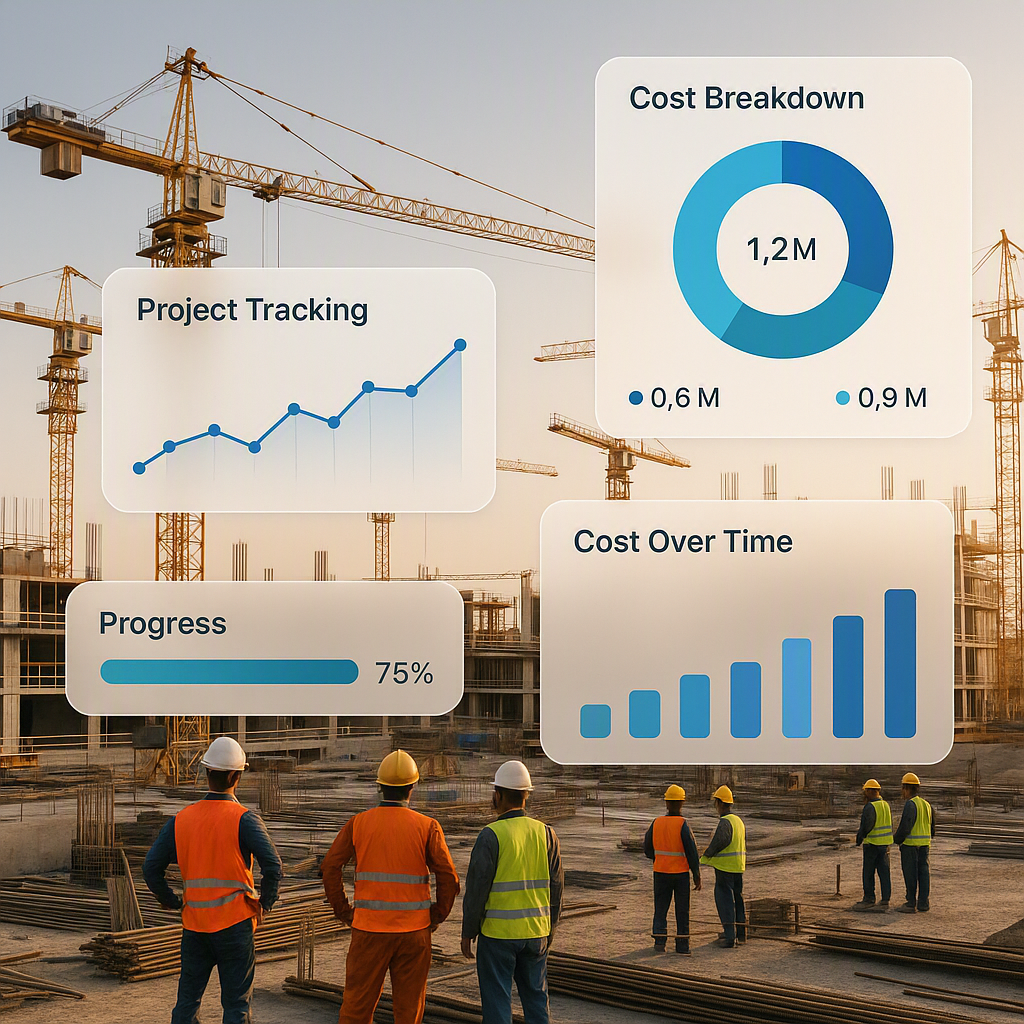
Don’t wait until the end of the month to review financials. AI tools provide real-time dashboards that show profitability across scopes and estimates. For example, JobNext’s dashboard lets you see which projects are on track and which are bleeding margins.
3. Predict Cost Overruns
AI isn’t just reactive; it’s predictive. It analyzes historical data to forecast where you’re likely to overspend. Contractors using JobNext have reduced cost overruns by up to 20% by catching issues early.
4. Automate Billing
Delayed billing leads to revenue leakage. AI tools automate invoice generation based on six billing methods, ensuring every billable item gets accounted for. JobNext’s system even supports complex billing structures like RA Bills and stage-wise payments.
5. Hold Subcontractors Accountable
Subcontractor payments should align with measurable progress. AI tools track work progress against contracts and trigger payment approvals only when milestones are met. JobNext does this seamlessly with its measurement-based tracking.
Real-World Impact
Want proof this works? One contractor in the GCC used JobNext to reduce margin erosion from 8% to 3% within six months. Their biggest win? Catching scope changes early and automating procurement workflows. You can read more about these success stories here.
And it’s not just large firms. Even mid-size contractors (50–200 employees) benefit from AI. By centralizing data and automating workflows, they’ve cut down manual errors and improved profitability across the board.
The Takeaway
Improving project profitability isn’t about working harder—it’s about working smarter. AI tools like JobNext give contractors the visibility and control they need to stop margin erosion. If you’re still relying on disconnected tools or manual processes, it’s time to rethink your operations.
Curious how JobNext fits into your workflow? Check it out.
Ready to see JobNext in action?
Multi-tenant SaaS ERP for construction, facilities management, and contracting — covering preconstruction, project execution, procurement, HR & payroll, equipment, finance, and 150+ analytics reports.
Get Started Free →Learn more at JobNext.ai